Clearing Sovereignty
Forty billion dollars could not reopen the Strait of Hormuz. The reason is quietly redrawing the risk map for every chokepoint on earth.

Washington built an up-to-forty-billion-dollar insurance machine to reopen the Strait of Hormuz. It wrote no cover. At the same time, United States forces reportedly helped guide around seventy commercial vessels through the strait with most transponders dark. Those are not two facts. They are one fact: strategic passage no longer clears through a single sovereign’s approval.
By Shanaka Anslem Perera.
June 1, 2026.
Begin with the failure that should not be possible.
In March, Washington stood up a government-backed maritime reinsurance facility to restart trade through the Strait of Hormuz. It began as a twenty-billion-dollar plan from the United States International Development Finance Corporation, with Chubb named lead partner, and was later reported at up to forty billion dollars as other large American underwriters were brought in. By the middle of May, on the reporting of people familiar with the programme, it had not issued a single dollar of cover.
The problem was not that the number was too small. The problem was that the money was aimed at one layer of a system that no longer cleared.
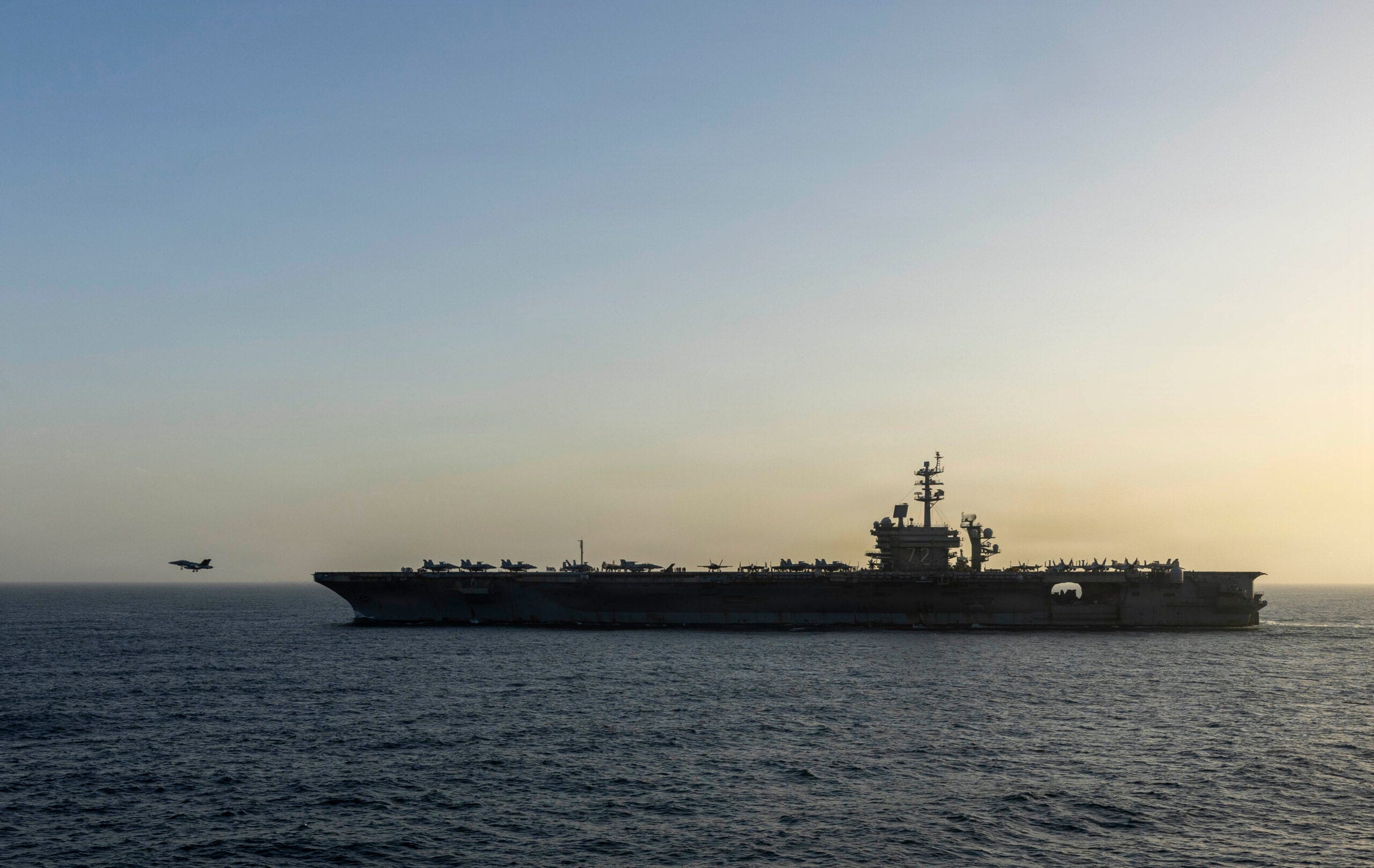
The facility was built to insure vessels moving under naval escort, and a durable escort regime never materialized. Meanwhile, on reporting that cites United States officials, Central Command helped guide around seventy commercial vessels through the strait over three weeks, most of them with transponders switched off to reduce the risk of detection. Shipping analysts could not independently confirm every crossing, because the ships were running dark.
That is the article in miniature. The richest government in history could supply capital. The strongest navy in history could supply guidance. Neither could, on its own, restore ordinary commercial passage. The ships did not need only money. They needed mine clearance, a route they could trust, war risk cover they could price, sanctions legality, operator and lender approval, crew confidence, and a transit path that would not turn passage itself into evidence of a prohibited transaction. Strip away one of those and the voyage does not clear. The Strait of Hormuz has not merely been closed. Its clearing stack has fractured.
This condition has not had a name. It needs one, because it is going to organize the next decade. I call it Clearing Sovereignty: the regime in which the right to pass through a place and the ability to clear commerce through that place have come apart, and the second has split across so many independent gates that no sovereign, no hegemon, no coalition can put it back together by decree. The old simplification is finished. The water may still be legally open and the hegemon may still be militarily dominant, yet commercial passage now clears through more than either law or force. That shift ended something this spring in sixty kilometers of water between Iran and the Arabian Peninsula, and the facility that wrote no cover while the Navy reportedly guided ships through in the dark is the proof.
Underneath the closure sits a mechanism, and underneath the mechanism sits an actor that has begun to exploit it, turning permission into money, route control, and commercial intelligence. The oil market that rallied on ceasefire headlines is trading a clock that has little to do with the clock the ships are running on, and the gap between those two clocks is where the mispricing sits. The framework will outlast this crisis, because the lesson of Hormuz was never only about Hormuz. It is about every chokepoint that comes next.
The Forty-Billion-Dollar Facility That Wrote No Cover
Hold the central fact still for a moment, because the whole argument hangs from it.
A government stood ready to absorb the war risk tail that private underwriters would not take, and it structured that backstop at a headline figure that began at twenty billion dollars and was later reported at up to forty. The facility existed. The policies did not. By mid-May the programme had written no cover, because, in the explanation its lead underwriter gave the Financial Times, it was built to insure ships transiting under naval escort, and there was no escort.
Read that and resist the obvious misreading, which is that money was scarce or that the design was clumsy. The money was abundant and the design was rational. What the episode reveals is subtler and far more important. Shipowners did not reject insurance as an abstraction. They rejected this facility as an operational answer, because it was tied to an escort structure that did not exist, and because the constraints actually keeping their hulls at anchor sat in layers of the system that no reinsurance treaty could touch. Washington overfunded one layer of the stack and under-resolved the layers that were binding. That sentence is the thesis of this entire piece, and the rest is the proof of it.
The Strait Did Not Reopen. It Fragmented.
The numbers come first, because in a story this drenched in narrative they are the hardest thing to ignore.
The Strait of Hormuz carried roughly twenty million barrels of oil and refined product a day in 2025, by the International Energy Agency’s accounting, close to a quarter of all the oil that moves by sea. It carried about ninety-three percent of Qatar’s liquefied natural gas exports and ninety-six percent of the UAE’s, near a fifth of the global LNG trade. There is no full substitute. The pipelines that bypass the strait move only three and a half to five and a half million barrels a day between them, which means that when the strait became commercially impaired the world lost the ability to reroute roughly three-quarters of what normally flows through it. There is no Cape of Good Hope detour for Gulf crude. The geography is a cul-de-sac with one exit, and the exit is the strait.
That single fact separates Hormuz from the Red Sea and governs everything downstream. When the Houthis made the Bab al-Mandeb lethal, ships sailed around Africa. It cost them two weeks and a fortune in bunker fuel, but the option existed, and the option capped the leverage of the people doing the closing. Hormuz offers no such mercy. The oil that cannot leave through the strait does not take the long way around. It does not leave. That captive quality is the source of the leverage, and it is also, as the strongest version of the bear case will show, the most powerful reason the strait could reopen faster than the pessimists believe, since the demand pressing against the closure is the most inelastic demand in the global economy.
Then the collapse. Reuters put pre-war traffic at roughly a hundred and twenty-five to a hundred and forty vessel transits on an average day. By late May the same reporting counted around eleven daily transits, with about twenty thousand seafarers still stranded across the Gulf. Whatever the exact figure on any given morning, the shape is unmistakable: a strait that has stopped working as a commercial artery while remaining, on paper and under the law of the sea, completely open. The whole story lives in the gap between the legal status of the water and the commercial reality on it.
The Stack
A tanker carrying crude from a Gulf terminal to a refinery in Asia is not making one decision. It is clearing a stack of permissions, each held by a different party with its own interests, its own liabilities, its own veto. In ordinary times the stack is invisible, every layer saying yes by reflex, the permissions clearing faster than thought, the way a card authorizes across a network nobody pictures. This crisis made the stack visible by forcing the layers to say no in sequence, and in the sequence it exposed the thing that matters most: nobody sits above the stack with the power to force a yes down through all of it.
The layers have an order, and the order is the argument.
Physical safety sits at the top, the captain’s veto, first because it is final. A master, and the owner behind him, will not take a vessel and a crew into water sown with mines and worked by fast attack boats, whatever the cargo is worth, whatever the freight rate has done. A larger number does not win this one. It is a human refusal, and the entire structure of money and law rests on it. Shipping executives put the same point in operational language on the first of June: even if a peace deal is signed, operators still need a clear framework for how vessels enter and leave, and the availability of insurance does not by itself make the strait a place owners want to transit. Mike Wirth, Chevron’s chief executive, said the same thing from the other side of the trade on Bloomberg in late May, that his company would not consider paying for passage and that shipowners and insurers would need to be comfortable before normal oil movement resumed, with six Chevron-chartered third-party vessels in the waterway as he spoke. While this layer says no, nothing beneath it matters.
Routing sits next, the need for a corridor a captain can trust and orders that will hold for the length of a transit. In a strait where drones, mines, naval vessels, and coastal batteries all sit inside the threat picture, trust is the rarest thing on the water, and neither side can manufacture it alone.
Insurance sits below routing, and here the popular story and the real one split, a split that matters more than any other single point in this piece, because mistaking this layer is exactly what sent an ocean of money at the wrong problem. The popular story says the market closed, cover was cancelled, the strait went dark. The truer story is availability against viability. Reuters reported that several marine insurers cancelled war risk cover effective the fifth of March and that premiums then rose steeply, in some quotes by more than a thousand percent, reaching one to three percent of a vessel’s value for a single transit. But Lloyd’s and market-linked reporting also made clear that cover remained available, which means the binding question was never absolute absence. It was price, exclusions, safety, and an owner’s willingness to sail. The insurance layer was a real and brutal constraint, but it was a constraint of viability, not of availability, and that distinction is the whole difference between a problem money can solve and a problem money cannot.
Sanctions sit below insurance, the layer where money turns and bites the hand that holds it. The United States Treasury designated Iran’s Persian Gulf Strait Authority on the twenty-seventh of May, naming it under counterterrorism authority as an arm of the Islamic Revolutionary Guard Corps. Treasury guidance issued as OFAC FAQ 1249 had already set the trap. Payments to, guarantees from, or services from Iran or the Guard for safe passage are not authorized for United States persons, even when no payment is made. Stand in the owner’s shoes. Iran requires his permission for safe transit. Accepting that permission is, to the United States, accepting a sanctioned service. The safe path and the legal path have been set in contradiction, and no insurer, no government backstop, no premium ever written reconciles them, because the prohibition attaches to the act of clearing itself.
Below sanctions the rest of the stack waits, each layer a genuine veto. The flag states, choosing which vessels their registries will permit into the zone. The lenders and charterers, each with an approval to grant or withhold. The International Maritime Organization, which pronounced the tolls illegal and commands not one ship to enforce the verdict. And at the floor, the reinsurance treaties, whose capacity, once withdrawn, has to be rebuilt by negotiation layer upon layer rather than restored by any announcement, on renewal cycles that turn on dates in January and at midyear that owe nothing to a ceasefire.
There is the stack. Physical safety, routing, insurance, sanctions, flag, finance, legitimacy, reinsurance. Eight layers, eight independent permissions, and the structural heart of the matter sits in plain view. No actor in the system holds more than two or three of them, and several carry liabilities immune to both money and command. Iran holds the physical passage and the toll. The United States holds the sanctions and the dollar. The London market holds the price of the cover. The captains hold the final refusal. Riyadh, if the access reporting is correct, holds a regional-access gate, which is the next movement of this story. Not one of them can deliver the others.
This is why the facility moved nothing. Washington poured capital into one layer, insurance capacity, and that layer was not the empty one. The layers actually doing the blocking, safety and risk-committee refusal on one side and the sanctions trap on the other, never saw a dollar and could not have been moved by one. You cannot buy your way down a stack that requires a dozen separate yeses and holds at least two that money will never reach.
No Single Yes
The principle under the stack deserves its sharpest edge, because this is the part of the framework that travels, the part a reserve manager in Riyadh or a chief investment officer in Singapore carries into a hundred decisions that have nothing to do with this strait.
No single yes reopens it. Iran declaring the water open is not enough. An American announcement is not enough. Insurance becoming available is not enough. The International Maritime Organization affirming the right of transit is not enough. Every gatekeeper must say yes in the same moment, and since each holds a real and independent veto, the system clears at the speed of its slowest and most frightened layer, never at the speed of its most powerful actor.
The converse is what keeps the framework from sliding into alarmism. No single no closes it either, unless that no genuinely binds behavior rather than merely making noise. The Lloyd’s correction is the discipline here. It stops anyone from calling the insurance market shut when the market was only expensive. A loud gate is not automatically a binding gate. The thesis earns its keep only where you can show at least one gate still binding after a supposed reopening, and the work is naming which gate, and when. Today the clearest binding gates are safety and risk-committee refusal on one side, and sanctions exposure on the other. When a deal is signed the safety gate eases first, and slowly, and the question that decides the entire trade is whether the sanctions gate and the reinsurance gate ease with it or lag a quarter or three behind.
Clearing Sovereignty is not a metaphor and not a mood. It is a specific, observable, falsifiable claim about where authority over a chokepoint now lives. It lives in the stack, distributed and beyond command, and the proof that it lives there rather than on any throne is that the most powerful actor in the system put an ocean of money against the closure and the ships did not move.
The Toll Was Misdirection
Most of the commentary on this crisis has been staring at the toll. The toll is the misdirection.
Under heavy military and financial pressure, Iran did something that looked like piracy and was in truth colder and cleverer. It built a bureaucracy. Its parliament codified a management plan for the strait, and in early May the state stood up the Persian Gulf Strait Authority, headquartered in Tehran, with a working email address through which vessels were told to request permission to pass. Treasury says the Authority requires vessels to submit requested information, obtain permission, follow Iranian-designated routes, and pay fees, working with the Guard and its navy to coordinate the traffic. For a fee reported near a dollar a barrel, roughly two million dollars for a fully laden supertanker, the vessel would be allowed through.
Every analyst saw the fee. The Treasury sanctioned the fee. Chevron refused the fee. Iranian officials boasted of the revenue, and a senior market strategist at a major American bank ran Iran’s own proposal through the arithmetic, charging a hundred-odd vessels a day two million dollars each, and arrived at seventy to ninety billion dollars a year under the high-volume case. That number is best read as a ceiling, not a realized run rate, because it depends on traffic normalizing, operators complying, and sanctions not making payment commercially toxic. The fee is real. The fee is large. The fee is not the point.
The point is the form you fill out to pay it.
The Database Is The Chokepoint
According to reported declaration materials, and consistent with Treasury’s description of the regime, vessels are required to submit commercial and operational information before receiving permission to transit, including ownership and beneficial owners, routing, cargo and its origin and destination, insurance, crew, flag, registry, and related commercial detail. Read that list again and ask what it actually is. A tollgate takes your coin, lifts the bar, and forgets you. This takes your coin and potentially creates a structured, self-reported map of precisely who owns, charters, insures, finances, and crews the vessels willing to consider transit despite American sanctions exposure. Iran did not only build a tollbooth across the Strait of Hormuz. It built a commercial-intelligence intake, and it compelled the global shipping industry to populate it by hand, as the price of passage.
Weigh what that map is worth to a sanctioned state, because it can be worth far more than the tolls it collects. It is a picture of the sanctions-tolerant fleet, a register of which owners and which lenders will accept exposure to American enforcement to keep trading, which is the same thing as a picture of the weak points in the wall the United States has spent two decades building around Tehran. It is the raw material of a targeting file, beneficial owners and cargo values and financiers, that could enable pricing by nationality, pressure on chosen owners, and the quiet identification of which hulls are worth detaining. It is a reading on the enforcement coalition itself, showing which flags and insurers and banks comply with Western pressure and which slip around it. OFAC has warned that providing sensitive vessel information into this regime can itself carry sanctions risk, which tells you Washington has read the intake the same way. The toll funds the apparatus. The apparatus is the asset. Iran has begun to convert a geographic chokepoint into a data chokepoint, and that is the move the next decade will study long after the specific toll has been negotiated into history, because that is the part that transfers. The toll is opportunism. The intake is the innovation, and innovations get copied.
The pieces have precedent. The modern combination is the novelty. A sanctioned authority, an international energy chokepoint, compulsory commercial disclosure, route permission, the monetization of safe passage, and direct United States sanctions exposure have not previously been fused at this scale, at one of the few places on earth where the economic need for passage is both systemic and only partially reroutable.
The Attribution Paradox
A second uncomfortable truth is buried in the insurance layer, and it inverts the moral geometry of the whole crisis.
The dates carry the argument, so take them in order. The kinetic phase opened at the end of February. Within days, before Iran had created any toll authority, before the Persian Gulf Strait Authority existed even as draft legislation, the war risk insurance market had begun to seize. In the first days of March the London market’s war committee widened its listed areas to cover the entire Gulf. Within days premiums had multiplied, several insurers had cancelled war risk cover effective the fifth of March, and tanker traffic had collapsed by the overwhelming majority of its volume. The strait stopped working as a commercial waterway in the first week of March. The Authority was not founded until the start of May.
Set those two timelines against each other and a disquieting conclusion forms. Iran did not close Hormuz alone. The first market gate to harden was the London-centered war risk system, repricing in response to the fighting, transmitting that repricing through premiums and listed areas and cancellation clauses until the commercial system shut a strait no navy had yet blockaded. Iran supplied the coercive input, the mines and the threats and later the permission regime. The clearing stack converted that input into a commercial closure, and it did so before the toll authority drew its first breath.
This is the attribution paradox at the center of the crisis, and it has to be handled with precision, because the tempting one-line version, that the City of London closed the strait, is both legally reckless and analytically false, since cover remained available. The accurate version is more unsettling anyway. The strait was closed by a feedback loop. Kinetic action generated a risk signal. The private clearing system priced that signal into commercial impracticality for most operators. The United States then sanctioned the Iranian response to the closure. Iran in turn monetized a closure it had not originally engineered and could not have engineered alone. No single actor closed the Strait of Hormuz. The system closed it, each participant behaving rationally inside its own incentives, and a closure owned by no one is a closure no one can lift. This is Clearing Sovereignty as a process rather than a structure, and it is why the situation is so much more durable than a blockade, which can always be lifted by whoever imposed it. There is no one here to lift it. There is only a stack to be cleared, layer by reluctant layer.
Riyadh’s Access Gate
The clearest single proof that even the hegemon does not stand above the stack came not from Iran and not from the underwriters but from an American partner, and it is the most underreported pivot of the whole affair.
In early May the United States launched an operation to escort merchant vessels through the strait and break the de facto blockade by presence. A small number of ships moved under the guns of guided-missile destroyers. Within roughly a day and a half the operation paused. The President announced the pause on his own platform and put it down to requests from Pakistan and other countries and to progress in negotiations.
That was the version for the public. The operative cause, reported by The Guardian citing NBC News on the word of United States officials, was that Saudi Arabia had refused the United States the use of its airspace and its bases for the operation, and that a direct call between the President and the Saudi crown prince had failed to move it. If the NBC-reported refusal is correct, it shows that the stack includes a regional-access gate that Washington cannot simply order open. Riyadh, weighing the risk that an escort campaign would drag the Gulf into a wider war and put its own oil infrastructure and desalination plants under fire, declined to permit it. Separate reporting that some access restrictions were later eased has not been independently confirmed, and belongs in the record as a reported claim rather than a fact.
Consider what that means for the structure of power in the region. The United States Navy, the most formidable instrument of force projection ever assembled, reached for the one capability the entire old freedom-of-navigation order rested on, the escort of commercial shipping through a contested strait, and on this account was stopped not by Iran but by a partner withholding access. On that reading, the navy meant to escort the ships had run into an access veto before it ever solved the maritime one. The facility was designed for a voyage that could not begin, because a layer of the stack that Washington had not even recognized as a separate layer said no. Every layer failed in sequence, each failure sovereign and independent, and one paused operation rendered the whole argument in miniature on the water.
The Workaround In The Dark
Which carries us back to where this began, to the ships running dark along the Omani coast, because the framework can now explain what the headline alone cannot.
When the escort never became a durable regime and the facility built around it wrote nothing, the residual flow that still had to move could not move through any clean layer of the stack. So it went around them. On reporting that cites United States officials, the military, unable to clear the stack, began quietly advising willing commercial vessels on how to bypass it, transponders off, hulls against the coast farthest from the Iranian guns. This is not an escort, and the reporting is careful on the point. American forces are not accompanying these ships. They are communicating and coordinating with them, a far weaker thing, a whisper rather than a shield. The most powerful navy in history was no longer restoring a transparent convoy regime. It was reportedly helping individual ships find a path through a waterway that still had not commercially cleared.
Refuse the seduction of the round number, because the round number is where the analysis goes to die. Even taken at face value, seventy guided crossings over three weeks is a trickle beside a pre-war flow of roughly a hundred and twenty-five to a hundred and forty daily transits. A separate figure, that close to two-thirds of outbound laden vessels in May sailed with their tracking signals off, comes from a maritime analytics provider and measures something different again, the share of the remaining traffic running dark, not the size of that traffic, and the two must never be welded into the false claim that the strait is two-thirds reopened under American guidance. It is not. The remaining passage is increasingly opaque: AIS-dark, hard to verify, and legally more complicated than ordinary commercial transit.
That opacity carries its own buried cost, the one the underwriters see and the headlines miss. Switching off a transponder is not a free maneuver. The implied warranty of lawful conduct beneath a marine policy, the international convention requiring vessels to keep their signals on except where the master judges them a genuine threat to the ship, the protection and indemnity clubs’ own warnings that going dark without legitimate cause can prejudice cover, all of it means that a ship sailing dark sits in a more complicated insurance and legal position than one sailing in the open, unless the wartime safety exception is properly logged and notified. The ships that move now often move with visibility reduced, insurance expensive, sanctions exposure unresolved, and verification impaired. This is not a clever solution to the clearing problem. It is the clearing problem, confessed in the open, by a navy reduced to teaching ordinary commerce to borrow techniques once associated with shadow fleets, because it can no longer promise safe passage as a public good.
This is the dual administration the moment has produced. Iran has attempted to administer one pathway through formal permission, a permit office and a radio channel and a toll, taking its fee and its data. The United States reportedly facilitates another through informal guidance, asking Tehran nothing and paying it nothing. The two are not symmetrical. Iran’s is a formal claim of sovereignty with a bureaucracy, a route map, and a revenue model. America’s is an informal workaround it will not put its name to, framed as the facilitation of a freedom rather than the assertion of a control. But both reveal the same decay of transparent passage. The old market assumption, that a strait was simply open, to all, on a signal anyone could read, is dissolving, replaced on one side by passage conditioned on permission and payment and disclosure, and on the other by passage conditioned on darkness.
Old Tools, New Scale
The framework has to survive its most serious objection, and on the dark sailing there is one, from the people who know the water best, and honesty requires putting it at full strength.
The maritime historians will tell you, correctly, that none of this is new. Warships have run dark in the Gulf for decades. Emissions control is a standard naval practice with a long pedigree. Sanctioned fleets have gone dark and spoofed their positions for years, often not restoring their signals until they were halfway across the next ocean. Convoy, escort, the quiet coordination of merchant traffic under threat, all of it goes back to the world wars and was last seen in these very waters in the tanker conflicts of the 1980s. When two American destroyers crossed the strait earlier in this crisis with their transponders deliberately switched on, a prominent maritime historian noted that a warship does not light itself up by accident, that the move was a calculated signal precisely because darkness is the baseline for a warship. The objection follows: the dual administration and the chokepoint decade overread what is in truth recycled wartime crisis management, the old techniques dusted off and run again.
The objection lands, and it should be granted where it is right, because granting it is what makes the rest credible. The techniques are old. Emissions control, dark transit, convoy guidance, the coordination of commercial shipping under fire, all of it has been done, and the framing of a wholly new maritime order built on wholly new methods overstates the novelty of the tools. But the objection misses three things that are new in degree, and both halves have to be held at once. The first is the scale at which mainstream commercial operators, not shadow fleets, not sanctioned evaders, but ordinary non-Iranian shipping, have taken up dark transit, a share that has climbed steeply into the majority of the outbound trade. The second is that the United States military is, on the reporting, now coordinating commercial dark transit as policy, not merely tolerating an adversary’s evasion. The third is the erosion of maritime transparency itself, the quiet retirement of the open signal as a global public good, spreading from the criminal margins into legitimate trade. Nothing here claims the methods are unprecedented. It claims an old technique has been pushed to an unprecedented scale and pulled into the center of state policy. A new degree, then, not a new architecture, and a serious reader should insist on the distinction, because it is the line between analysis and viral overstatement.
The Market Is Pricing The Wrong Clock
Everything above resolves into a single mispriced variable, and naming it is the most useful thing this analysis can do for the desk that has to act on Monday.
In late May, on reports that a sixty-day ceasefire and a deal to reopen the strait were near, the oil complex sold off hard, the global benchmarks shedding roughly nineteen and seventeen percent across the month on de-escalation hopes, after having hit four-year highs above a hundred and twenty-six dollars since the war began. The market began pricing the reopening of the Strait of Hormuz the instant the reopening became politically plausible. Traders moved on the headline. They moved on the prospect of a signature.
This is the error, and it is precisely the error Clearing Sovereignty predicts. A political reopening and a commercial reopening are not the same event, and they are separated not by hours but by quarters, because the political event clears one layer of the stack, the kinetic-safety layer, while the others, the sanctions designations, the reinsurance capacity, the risk-committee sign-offs, the flag authorizations, clear on their own slower clocks. The market prices the speed of the announcement. Ships clear at the speed of the slowest gate.
We have a base rate for how slow that gate runs, and it is the single most useful comparator for anyone positioning around this. The Red Sea offers two clocks, not one. On the faster clock, freight pricing can begin to fall within two to three months once attacks are curbed, a compression of twenty to twenty-five percent in the view one major terminal operator gave Reuters. On the slower clock, the operators themselves wait. Reuters reported that shipping companies were expected to wait months for assurances before resuming Red Sea routes even after ceasefire signals, because the governance and risk-committee approvals a large line requires take more time still after the premiums have fallen. The biggest container lines did not run their first tentative return voyages until long after the shooting stopped.
Lay Hormuz on that base rate and the conclusion sharpens rather than softens, because Hormuz carries every friction the Red Sea carried and adds the ones the Red Sea never had. The Red Sea had no sanctioned permission authority whose toll triggered American secondary sanctions. It had no minefield demanding a clearance operation before anyone would sail. It had no compulsory data-disclosure regime an owner had to weigh against his own exposure. And the Red Sea, above all, was reroutable, so the lag there was cushioned by an alternative, while Hormuz has no alternative at all, which intensifies the demand to reopen without making a single gate clear one day faster. The reasonable expectation is that Hormuz clears at least as slowly as the Red Sea’s slower clock, not faster, even after a deal is signed.
This is the temporal arbitrage, the gap between the clock the market is trading and the clock the mechanism runs on. The market has priced some disruption, but not enough of the clearing lag if Hormuz behaves worse than the Red Sea base rate. The asymmetry between those two clocks is the edge, and it does not express itself first in the flat price of oil, where a genuinely clean reopening could indeed drive the price sharply lower. It expresses itself in the instruments that track the clearing lag itself: the persistence of war risk premiums deep into the second half of the year, the freight and ton-mile dynamics as vessels keep routing the long way around, the credit of the import-dependent sovereigns who cannot simply arbitrage away a chokepoint shock, and the earnings of the marine underwriters for whom a durably elevated war risk baseline is a multi-quarter tailwind. The cost of using the strait has overtaken the right to use it, and the cost hides in places the front-month oil screen does not show.
The Counter-Case At Full Strength
A framework worth holding must survive the strongest case against it, set out here at full force, because anything less is a straw man, and a straw man fools only its author.
The case runs like this. This is the Red Sea again with better production values, a war risk shock dressed in the costume of a regime change, and the captive nature of Gulf demand will reopen the strait fast once the shooting stops, precisely because there is no alternative route and the entire oil-importing world is leaning on the closure. The Lloyd’s correction, on this reading, already told the truth: cover was always available, the only real constraint was physical safety, and physical safety is exactly what a ceasefire restores. No single yes collapses into no peace yet, and the moment peace arrives the permissions cascade and the ships move in weeks, not quarters.
That case lands two real blows and misses the third, and the misses are where the framework holds. It is right that insurance capacity was available, which is why I have downgraded the insurance layer here from a binding constraint to a viability friction, in the open and without hedging. It is right that physical safety is the dominant single gate. But it is wrong that the situation reduces to no peace yet, and the proof is the facility that wrote no cover during a stretch when partial military presence existed and government-backed reinsurance sat on the table. The sanctions trap is an independent veto a ceasefire does not lift, because the designation of the permission authority stays in force and the contradiction between Iran’s required permission and America’s prohibited service survives the silence of the guns. The reinsurance gate clears on treaty calendars, not diplomatic ones. And the captive-demand argument, the genuinely powerful part of the case, cuts both ways, since it is the best reason to hold real probability on a faster reopening, which I do, but inelastic demand presses against gates that clear on their own schedules, and pressure neither accelerates a risk committee nor repeals a sanction. The honest position is not that the lag will certainly run long. It is that the market has priced some disruption but not the full clearing lag, which leaves the lag mispriced if Hormuz behaves worse than the Red Sea.
So the distribution, stated as scenario rather than forecast. The most likely path, at roughly half the probability, is a frictional reopening: a deal signed, the kinetic danger receding, commercial clearing lagging one to three quarters as the lower layers grind open. In that path the flat price can fall from its panic highs without the clearing premium disappearing from freight, insurance, the forward curve, and exposed import-credit risk. A faster normalization, in which captive demand and available cover snap traffic back within weeks, holds perhaps fifteen to twenty percent, and it is the scenario that would weaken this framework most, which is exactly why I name it rather than bury it. A harder path, in which Iran institutionalizes a rebranded navigation-services fee through a quiet bilateral arrangement and elevated frictions persist past a year, holds something like a fifth to a quarter. A tail, in which the fragile ceasefire collapses as it has already strained once and the benchmark spikes back toward its earlier highs, holds perhaps a tenth. The framework needs none of these to be certain. It needs only that the reader grasp that the strait reopens for commerce on a slower clock than it reopens on the front page, and that the reader can name the gate being watched.
What Would Prove Me Wrong
I will state the conditions under which this framework fails, with thresholds and a clock, before the outcome is known, because a thesis that cannot be killed is not a thesis but a horoscope.
Set the political reopening, the signed ceasefire and reopening announcement, as time zero. If, by time zero plus sixty days, transits remain below seventy-five percent of the verified pre-war baseline while war risk premiums and sanctions guidance stay elevated, the framework is confirmed. If instead transits exceed a hundred a day for thirty consecutive days, with signals back on, no residual permission paperwork from the Authority, and war risk pricing back near its pre-crisis levels, the framework is weakened and Clearing Sovereignty will have described a passing wartime condition rather than a durable regime. The single variable to watch is that transit count in the first six weeks after a deal. Everything else is commentary.
It is strengthened, conversely, by exactly what the world has already shown. A sovereign insurance backstop that wrote nothing. A permission authority that persists under sanction. A ceasefire that does not, on its own, move ships. And it is strengthened most of all by the thing worth watching over the next two to three years, which is replication, because the deepest claim here was never about Hormuz at all.
The Chokepoint Decade
A framework earns its keep by telling you where to look next, and this one points somewhere specific and somewhere uncomfortable.
The template Iran assembled this spring, physical chokepoint control fused with a forced commercial-intelligence intake, a settlement channel that leans away from the dollar, and a tiered system of access priced by nationality, is transferable. It does not require Iran’s particular grievances or Iran’s particular geography. It requires only a chokepoint, a state willing to administer it, and the discovery, now made and now public, that the clearing stack of the modern shipping economy is fragmented enough that a determined actor can seize one layer of it and extract both revenue and intelligence without ever winning a naval war. A partial precursor ran at the Bab al-Mandeb, where the war risk premium itself became a de facto toll and a route stayed half-empty for the better part of two years despite enormous force spent against the people closing it. The more sophisticated version was attempted at Hormuz, with a bureaucracy and an intake and a settlement channel and a navy reduced to guiding ships through in the dark. The next actor will study both.
Look at the map through this lens and the watchlist arranges itself. The Bab al-Mandeb is already live. The Turkish Straits run under a convention that already makes a transit regime lawful and codified, the precise precedent a future administrator would reach for to dress itself in legitimacy. The Malacca Strait, through which the energy of the world’s second-largest economy must pass, where that economy has every reason to study both the vulnerability and the tool. The Panama Canal under shifting commercial influence. The Arctic routes a warming world is opening, which a confident power increasingly treats as its own water. And beneath all of them the subsea cable corridors through which the world’s data does not metaphorically but physically flow. Every one is a chokepoint. Every one has a clearing stack. Every one is now, after this spring, a place where a state has been shown how to convert geographic control into data, revenue, and leverage without firing the shot the old order was built to deter. We abolished the last great toll on a strait more than a century and a half ago and spent the years since assuming the age of paying a sovereign for passage was safely behind us. The specific Hormuz toll may still be negotiated away. The template is not reversible by any single actor, and the watchlist is longer than the consensus has allowed itself to believe.
The arithmetic of the old order was simple, and it is now incomplete. One navy, one guarantee, freedom of navigation as a public good underwritten by the strongest fleet afloat. The arithmetic of the new order is merciless in a colder way. Many gates, many sovereigns, no single key, and a clearing process that grinds at the speed of its most reluctant layer while the cargo the whole world runs on waits at anchor. Washington set an ocean of money against that arithmetic, and the arithmetic did not yield, because you cannot buy a yes from a stack that demands a dozen of them and holds at least two that money will never reach.
The market prices the signature. Ships clear through the slowest gate. Learn to price that lag, learn to name the binding gate, and learn the word for the regime that produced it, because you will need all three again, at the next chokepoint, sooner than the consensus has allowed itself to believe.
Source note: This analysis relies on International Energy Agency chokepoint data; Reuters reporting on the DFC and Chubb reinsurance facility, war risk cancellations effective March 5, oil prices and four-year highs, Chevron chief executive Mike Wirth’s refusal to pay a Hormuz toll, ship operators urging clear rules for transit on June 1, and late-May transit counts with tankers exiting transponders-off; the Financial Times report that the up-to-forty-billion-dollar programme had written no cover; OFAC FAQ 1249 and the Treasury designation of the Persian Gulf Strait Authority on May 27, 2026; UNCLOS Part III, Articles 38, 42, and 44; Lloyd’s and Lloyd’s Market Association linked reporting on insurance availability and repricing; The Guardian, citing The New York Times and United States officials, on United States guidance of around seventy AIS-dark crossings; The Guardian, citing NBC News, on Saudi access objections to the escort operation; and Red Sea comparator reporting from Reuters on freight-price compression and operator caution after ceasefire signals. Claims resting on anonymous officials, paywalled reporting, or maritime analytics snapshots are treated as reported claims, not independently verified facts. The discussion of the toll arithmetic and the declaration fields also relies on reported J.P. Morgan market-strategy commentary and reported Vessel Information Declaration materials, and those figures and fields are treated as reported inputs rather than independently audited facts.
DISCLAIMER: This analysis is provided for informational and educational purposes only. Where it discusses sanctions, insurance, maritime law, or vessel operations, it does so as geopolitical and market analysis, not as legal, compliance, underwriting, tax, or navigational guidance. It does not constitute investment, legal, tax, accounting, or financial advice, nor a recommendation, offer, solicitation, or inducement to buy, sell, or hold any security, commodity, currency, digital asset, derivative, or other instrument, nor to adopt any trading or investment strategy, in any jurisdiction. Nothing herein is a research report prepared by a registered broker-dealer or investment adviser, and the author is not acting as a fiduciary to any reader. The frameworks, scenarios, probabilities, and ranges presented are the author’s personal analytical judgments as of the date of publication, are inherently uncertain, are not statements of fact or forecasts of any specific outcome, and are subject to revision or withdrawal without notice. Figures are drawn from primary and high-grade public sources believed reliable but not independently audited; where a claim could not be verified to a credible source it has been excluded or expressly qualified, and a number of operational details described in contemporaneous reporting remain contested, unconfirmed, or subject to official denial, including matters of governmental and allied conduct noted in the text. Characterizations of the conduct, intent, capabilities, or positioning of any government, agency, company, or individual are interpretive analysis of publicly reported events, are offered in good faith and on matters of public interest, and are not assertions of established fact or imputations of unlawful conduct. All third parties named are referenced solely in connection with their publicly reported statements or roles. Markets carry risk, including the total loss of capital; past performance and prior analysis do not indicate future results. Readers must conduct their own due diligence and consult their own qualified legal, financial, and tax advisers before acting on anything contained herein. To the fullest extent permitted by law, the author and publisher accept no liability for any loss or damage of any kind arising directly or indirectly from reliance on this material. The views expressed are the author’s own and do not represent those of any employer, client, or affiliated institution.
Well done. Thanks
Impressive commentary