THE NITROGEN TRAP
How a 21-Mile Strait Threatens the Nutrient System Feeding Half the World

By Shanaka Anslem Perera | March 16, 2026
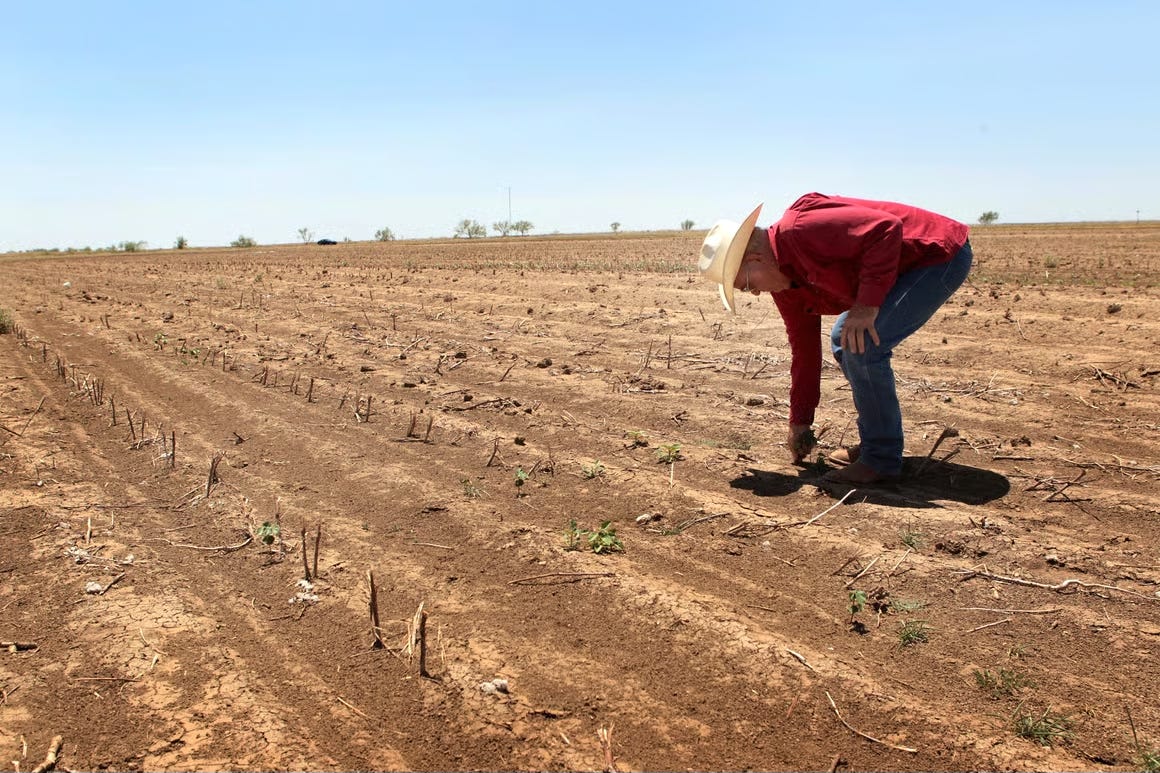
“The lever of blocking the Strait of Hormuz must definitely continue to be used.” Statement attributed to Ayatollah Mojtaba Khamenei via Iranian state media, March 12, 2026
The world spent fifty years and hundreds of billions of dollars building Strategic Petroleum Reserves so that no geopolitical rupture could fully sever modern civilization from energy. The United States alone holds just over 400 million barrels of crude oil in salt caverns beneath the Gulf Coast. On March 11, 2026, the International Energy Agency authorized a record 400-million-barrel emergency release from member-country reserves, the largest coordinated drawdown in the Agency’s history. Energy insecurity has institutions, stockpiles, and doctrine.
Fertilizer insecurity does not.
No country appears to maintain a fertilizer reserve system remotely comparable in scale, doctrine, or strategic importance to the petroleum reserve architecture built after the oil shocks of the 1970s. Today’s policy response to the Hormuz crisis is not a nutrient reserve release. It is an improvised attempt to rebuild shipping and insurance capacity on the fly. This structural asymmetry, now exposed with violent clarity, may prove to be one of the most consequential oversights in the history of modern statecraft. The Strait of Hormuz, a 21-nautical-mile corridor of shallow water between Iran and Oman, does not merely carry twenty percent of the world’s oil. It carries a significant share of the molecular foundation underlying half the planet’s food supply. UNCTAD estimates that roughly one-third of global seaborne fertilizer trade passes through Hormuz. The Fertilizer Institute separately estimates that exporters exposed directly or indirectly to the conflict account for nearly 49 percent of global urea exports, nearly 30 percent of global ammonia exports, and nearly half of global sulfur trade. That combination makes Hormuz not merely an energy chokepoint, but one of the most concentrated nutrient chokepoints in the global food system. Since late February 2026, commercial traffic through that corridor has effectively collapsed. UNCTAD reports daily ship transits fell by approximately 97 percent. As of mid-March, neither belligerent has shown willingness to negotiate. Trump rejected allied efforts to launch ceasefire talks on March 14. Iran’s foreign minister stated on March 15: “We never asked for a ceasefire.” And the spring planting clock is ticking toward a deadline that no diplomatic breakthrough can extend, because seeds do not negotiate, soil chemistry does not pause for geopolitics, and the quadratic yield response curve of cereal crops does not bend to the will of men who have never planted a field.
This is the story of the Nitrogen Trap. It is not primarily a story about war, though war is its catalyst. It is not primarily a story about oil, though Brent crude closed above $100 per barrel on March 12. It is not primarily a story about commodity markets, though fertilizer equities have surged roughly forty percent in fourteen trading days. It is the story of a civilization that optimized every node of its food production system for cost efficiency while concentrating existential dependencies in chokepoints it cannot control, inputs it does not stockpile, and insurance markets it does not regulate. The answer, as we are about to discover, is that these systems are not merely repricing. They are fracturing. And the fractures propagate through at least fourteen distinct transmission channels, from the farm gates of Iowa to the bread queues of Cairo, from the urea factories of Chattogram to the diesel exhaust systems of Australian road trains, from the desalination plants of Bahrain to the generic drug factories of Hyderabad, in a cascading architecture of failure that no consensus model has yet mapped in its entirety.
What follows is that map.
I. The Invisible Architecture: How Natural Gas Became the Foundation of Human Calories
To understand why the effective closure of a narrow strait eight thousand miles from the American Corn Belt threatens the caloric security of billions, one must first understand the invisible architecture upon which modern agriculture depends. That architecture has a name. It is called the Haber-Bosch process, and it is arguably the most consequential invention in human history, more important than the printing press, more transformative than the internet, more fundamental to the shape of civilization than nuclear weapons. Without it, the planet’s agricultural carrying capacity would support approximately four billion people. The current population is eight billion. The arithmetic is not subtle.
Fritz Haber and Carl Bosch solved, in 1909 and 1913 respectively, the problem that had constrained human population growth since the dawn of agriculture: the availability of biologically accessible nitrogen. Nitrogen comprises 78 percent of Earth’s atmosphere, but atmospheric nitrogen exists as N2, a molecule bound by one of the strongest covalent bonds in nature. Plants cannot use it. They require reactive nitrogen, fixed into ammonia or nitrate, and before Haber-Bosch, the only significant sources were biological fixation by leguminous bacteria, lightning strikes, and deposits of guano and Chilean saltpeter. These natural processes could support perhaps 3.5 to 4 billion people at subsistence levels. Haber-Bosch shattered that constraint by combining atmospheric nitrogen with hydrogen derived from natural gas under extreme heat and pressure to produce anhydrous ammonia, the foundational molecule from which all synthetic nitrogen fertilizers descend.
Synthetic nitrogen fertilizer is not a marginal agricultural input. It is one of the hidden metabolic foundations of modern civilization. Current estimates suggest that crops grown with synthetic nitrogen fertilizers feed roughly 48 percent of the global population, a figure drawn from scientific literature spanning Vaclav Smil’s foundational work through recent Nature Food analyses. Older formulations frame the dependence even more starkly: more than half the world’s population is nourished by food produced with synthetic nitrogen. The process consumes roughly 1 to 2 percent of global energy production. It is, without exaggeration, the metabolic engine of human civilization.
And the Persian Gulf is where that engine runs most efficiently.
The Gulf states possess the world’s cheapest natural gas, the feedstock that simultaneously provides the hydrogen atoms and the thermal energy for ammonia synthesis. This cost advantage has made the region a dominant center of global nitrogen fertilizer production. Qatar’s QAFCO complex at Mesaieed is the largest single-site urea exporter on Earth, with 5.6 million tonnes of annual capacity. Saudi Arabia’s SABIC Agri-Nutrients produces roughly 5 million tonnes of urea annually. Ma’aden has built phosphate capacity exceeding 7 million tonnes. The UAE’s Fertiglobe operates 6.6 million tonnes across the region. Oman’s OMIFCO ships approximately 1.65 million tonnes exclusively to India. Pre-war Iran was among the world’s largest urea exporters at roughly 5 to 6 million tonnes per year.
All of it exits through the Strait of Hormuz. There is no pipeline alternative, no overland route, no substitute corridor. The molecules are manufactured in facilities that sit, almost without exception, on the western shore of the Persian Gulf, and they reach the world through 21 miles of water that Iran’s new Supreme Leader has explicitly declared should remain blocked.
But the nitrogen dependency is only the first layer. Beneath it lies a second, deeper vulnerability that most analysts have failed to map: sulfur. The Persian Gulf refines vast quantities of sour crude oil and natural gas, and the desulfurization process generates elemental sulfur as a necessary byproduct. TFI estimates that nearly half of global sulfur trade is tied to countries exposed directly or indirectly to the conflict. This matters because sulfur is the essential precursor for sulfuric acid, which is itself the chemical solvent required to process raw phosphate rock into plant-available fertilizer. Without sulfur, phosphate production chains fracture globally, even in countries that mine their own phosphate rock. Morocco’s OCP Group, the world’s largest phosphate exporter, imports roughly 3.7 million tonnes of Gulf sulfur annually. China imports approximately 4 million tonnes. The removal of Gulf sulfur does not merely constrain phosphate supply in the Middle East. It threatens to impair phosphate processing in Africa, Asia, and everywhere else that depends on imported acid.
And then there is China’s response, which has introduced a third layer of compounding disruption. Seeking to protect its domestic agricultural sector and stabilize prices ahead of its own spring planting season, Beijing directed the suspension of phosphate fertilizer exports through August 2026, reportedly removing an estimated 4.5 million tonnes from global availability. The result is a devastating pincer: Hormuz physically disrupts nitrogen supply, the resulting sulfur shortage pressures Chinese domestic production, and Beijing’s export restrictions administratively constrain phosphate supply for the rest of the world. Farmers now confront what may be the first simultaneous disruption of all three primary nutrient complexes since the Haber-Bosch process was industrialized.
II. The Architectural Fracture: How Insurance, Not Missiles, Sealed the Strait
Operation Epic Fury commenced at 0300 local time on February 28, 2026, when the United States and Israel launched the largest coordinated air campaign in the Middle East since the 2003 invasion of Iraq. The strikes targeted Iranian ballistic missile infrastructure, naval capabilities, air defense networks, and nuclear facilities. By mid-March, CENTCOM reported the destruction of thousands of targets across Iranian territory. The campaign included B-1 and B-2 bomber deployments, A-10 Thunderbolt II overwatch missions, and precision strikes from multiple carrier groups.
The strategic objective was the permanent degradation of Iran’s capacity to threaten regional stability. The tactical execution was, by conventional military metrics, extraordinarily effective. Within 72 hours, Iran’s long-range missile capability was severely degraded, its air force largely grounded, and its command structure disrupted. Supreme Leader Ali Khamenei was reported killed in the opening salvos. His son, Mojtaba Khamenei, was identified as successor on March 9 under circumstances of profound personal and institutional crisis.
But the asymmetric response transformed what the Pentagon designed as a rapid, decisive campaign into an economic siege of the global economy. Iran could not match American airpower. It did not need to. It possessed something more effective for the purpose of economic warfare: geographic leverage over a chokepoint through which one-fifth of the world’s oil, one-quarter of its liquefied natural gas, and a major share of its traded fertilizer must pass.
Within days of the first strikes, more than twenty commercial vessels were reported hit by Iranian projectiles, explosive-laden drones, and suspected naval mines. The Strait of Hormuz became, in the words of a former US Navy commander quoted by Fortune, an Iranian “kill box.” Western commercial transit effectively ceased. The only vessels still moving were Iranian-flagged tankers carrying crude to China and a handful of Chinese-owned bulk carriers broadcasting their nationality on AIS signals in the hope that Tehran’s targeting systems would discriminate.
But the physical interdiction alone did not seal the strait to commercial traffic. What completed the closure was something far more subtle, far more durable, and far less understood by the geopolitical commentariat: the fracture of the global maritime insurance architecture.
In the first week of March 2026, multiple major Protection and Indemnity clubs issued coordinated 72-hour cancellation notices for certain war-risk coverage extensions in the Persian Gulf. These mutual insurance pools collectively cover approximately 90 percent of the world’s ocean-going tonnage. Without adequate P&I coverage, commercial vessels face severe legal and financial barriers to transit. The cancellations were not arbitrary policy decisions. They were a regulatory inevitability. Under the European Union’s Solvency II Directive, insurers must maintain capital reserves sufficient to withstand a one-in-two-hundred-year loss event with 99.5 percent confidence. The capital buffers supporting marine war-risk underwriting had already been depleted by 26 consecutive months of losses from the Red Sea shipping crisis, where Houthi attacks had forced the rerouting of global container traffic around the Cape of Good Hope. When Operation Epic Fury ignited the Persian Gulf, it created a catastrophic geographic concentration of correlated risk. The simultaneous exposure of roughly 100 to 120 high-value vessels within the Hormuz corridor exceeded the aggregation limits that remaining Solvency II capital could support. The capacity did not merely reprice. It contracted violently.
For the specialist underwriters who remained in the market outside the mutual pools, premiums surged from roughly 0.1 to 0.25 percent of vessel value to between 1.5 and 5.0 percent per seven-day transit period, according to industry reporting. For a standard commercial vessel valued at fifty million dollars, the insurance cost alone escalated from roughly twenty-five thousand dollars to upwards of two million per transit. A cargo of urea, with its comparatively thin margin profile, simply cannot absorb a multi-percentage-point hull-value insurance tax for a seven-day voyage. The economics of fertilizer shipping through Hormuz became prohibitive before a single mine needed to detonate.
Washington’s response was financial rather than naval. On March 6, the US International Development Finance Corporation announced a twenty-billion-dollar sovereign-backed maritime reinsurance plan for Gulf shipping, and on March 11 it named Chubb as lead insurance partner. The policy significance is real. The operational proof is not yet visible. As of March 16, there is no confirmed public evidence that the program has restored fertilizer shipping at meaningful scale, which suggests that the binding constraint remains physical security and vessel willingness, not just the formal availability of insurance capacity. Insurance compensates for financial loss, but it does not intercept anti-ship missiles, sweep mines, or prevent the death of civilian seafarers. Until the US Navy can guarantee safe passage, financial instruments alone appear insufficient to restart the molecular flow.
The Navy, for its part, has been remarkably candid about its limitations. Senior administration officials confirmed on March 12 that the military was “not ready” to provide commercial escorts, with operational capability estimated weeks away at the earliest. The Navy’s dedicated minesweeping assets were effectively retired in 2025. Key allies, including Japan and Australia, have publicly declined to participate in any escort coalition, citing domestic legal frameworks and risk assessments. Defense Secretary Hegseth told reporters not to “worry about it,” a statement that industry analysts received with something between despair and incredulity.
The result is an architectural fracture unlike anything the global shipping system has experienced in the modern era. The Red Sea crisis, for all its disruption, merely repriced the insurance market. Ships continued to move, albeit on longer routes. Hormuz has fractured the market itself. The underwriting capacity that enabled commercial transit has contracted, the sovereign backstop has not yet substituted for physical security, and the normalization timeline extends well beyond any planting season. Insurance professionals describe the path to recovery as sequential and multi-layered: risk model recalibration, reinsurer re-engagement, treaty renewal, individual vessel re-underwriting. Even after a hypothetical ceasefire, analysts estimate 30 to 60 days of incident-free stability before affordable premiums return. The Red Sea precedent is instructive: 26 months after Houthi attacks began, war-risk premiums never returned to pre-crisis levels.
III. The Clock That Cannot Be Stopped: Biological Deadlines in a Geopolitical Vacuum
The single most important variable in the Nitrogen Trap is not the price of urea, the trajectory of Brent crude, or the diplomatic posture of Tehran and Washington. It is time. And time, in agriculture, is not a continuous variable that can be stretched or compressed by market forces. It is a series of biological deadlines that, once missed, produce consequences that no subsequent intervention can reverse.
The Northern Hemisphere spring planting window opened in early March 2026. In the American Corn Belt, farmers must complete nitrogen application and corn planting between mid-April and late May. Miss that window, and the growing season shortens below the thermal threshold required for physiological maturity, reducing yield progressively for every day of delay past the optimal date. In India, Kharif season preparations begin in May for monsoon-season planting in June and July. Australian winter crop preparation demands urea delivery between April and June for the wheat, barley, and canola that form the backbone of the nation’s agricultural exports.
These deadlines are set by photosynthesis, by soil temperature, by accumulated growing degree days. They cannot be renegotiated. A diplomatic breakthrough on April 15 does not help a farmer who needed to apply nitrogen on April 1. A convoy that delivers urea to Mumbai in July does not help a rice paddy that needed top-dressing in May. The Carnegie Endowment captured this with precision when its analysts noted that restarting production and transport could take weeks, weeks that Northern Hemisphere farmers do not have.
The farm-gate economics have already entered crisis territory. As of the week ending March 12, NOLA urea barges were trading in the $600 to $620 per short ton range according to StoneX, with spot and retail peaks reportedly reaching $683 per short ton, representing a roughly 30 percent spike from the pre-conflict baseline near $475. The broader North America Fertilizer Price Index topped $810 per short ton on March 9, surpassing the previous cycle peak. DTN retail surveys published March 11 show anhydrous ammonia at $895 per ton, up 19 percent year-over-year, while USDA’s Iowa Production Cost Report for the period ending February 6 reported a range of $804 to $925 per ton. Southeast Asian granular urea has surged above $700 per tonne for April and May deliveries. In Australia, offers have breached A$1,200 per tonne as of mid-March, up more than 45 percent from pre-war levels near A$830 to $840.
At these price levels, the rational economic response for an American corn farmer is straightforward and devastating. With anhydrous ammonia approaching $900 per ton and new-crop corn futures around $4.50 to $4.60 per bushel (crop insurance spring reference price), the nitrogen affordability index has plunged to historically adverse territory. The American Farm Bureau estimates break-even corn production costs at $5.00 per bushel for 2026, roughly 40 cents above the current market. The mathematics compress: at current prices, planting corn is a structurally unprofitable proposition across a significant portion of the American heartland.
The equilibrium response is acreage substitution. Corn is the most nitrogen-intensive major crop, requiring roughly 150 to 200 pounds of applied nitrogen per acre. Soybeans, by contrast, are legumes capable of biological nitrogen fixation, requiring minimal to no synthetic nitrogen fertilizer. The soybean-to-corn price ratio at approximately 2.4 strongly favors the switch. USDA’s pre-crisis Agricultural Outlook Forum projected corn at 94 million acres, down 4.8 million from 2025’s near-record 98.8 million, and soybeans at 85 million acres, up 3.8 million. Post-crisis, agricultural economists project an additional 1.0 to 2.0 million marginal acres shifting from corn to soybeans. The USDA Prospective Plantings report on March 31 will provide the first survey-based confirmation of this shift, and the market is intensely focused on this date as the moment when the fertilizer crisis translates into a quantifiable grain supply revision.
But the acreage shift is only the visible portion of the adjustment. The invisible portion is rate reduction: farmers who plant corn but apply less nitrogen than the agronomic optimum because they cannot afford or cannot procure sufficient supply at the right time. This is where the biophysical mathematics become critical, and where consensus models make their most dangerous error.
IV. The Quadratic Cliff: Why Linear Models Guarantee Institutional Surprise
Institutional analysts, trained in the linear mathematics of financial markets, instinctively model the relationship between fertilizer input and crop output as proportional. If fertilizer supply drops 20 percent, they assume yield drops roughly 20 percent. This assumption is dangerously wrong. The yield response of cereal crops to nitrogen application follows a quadratic function, a second-order polynomial curve characterized by diminishing marginal returns, and this nonlinearity is the hidden variable that transforms a manageable supply disruption into a potential food security crisis of the first order.
A landmark 2022 study published in Nature Food, synthesizing data from 25 long-term field experiments across global cereal systems, codified what agronomists have understood for decades but economists routinely ignore. The key agronomic fact is not that less nitrogen means less yield. Everyone knows that. The key fact is that the relationship is nonlinear. In systems that already apply nitrogen at or above the agronomic optimum, moderate reductions can sometimes be absorbed with relatively modest yield loss. In systems already operating near deficiency, the same percentage reduction pushes crops off the steep part of the response curve, where yield damage accelerates sharply. The practical implication is that a global fertilizer shock is never distributed evenly. The poorest and most nutrient-constrained farming systems suffer the largest marginal damage.
This mathematical structure creates a brutal asymmetry. In highly developed agricultural systems where nitrogen application rates sit at or slightly above the economic optimum, a forced 10 to 15 percent reduction operates on the flat apex of the curve. The resulting yield penalty is a manageable 2 to 5 percent. American and European farmers, who typically over-apply relative to the agronomic optimum as an insurance buffer, can absorb moderate reductions with minimal production loss, particularly if they deploy precision agriculture technologies like variable-rate application. Nebraska’s Project SENSE demonstrated average nitrogen savings of 33 pounds per acre with maintained yields. Variable-rate systems now guide placement on roughly 70 percent of corn and soybean acres in the upper Midwest.
But the agricultural systems of the Global South operate on an entirely different portion of the curve. Sub-Saharan Africa applies an average of less than 20 kilograms of fertilizer per hectare, according to World Bank data, roughly one-seventh of the global average. South Asian smallholders operate at or below the economic optimum under the best of circumstances. For these farmers, the crisis does not produce marginal adjustment. It pushes crop development off the steep, ascending portion of the response curve, where every kilogram of nitrogen reduction produces disproportionate yield destruction.
The empirical evidence for this cliff is not theoretical. Sri Lanka provided a devastating natural experiment in 2021 when President Rajapaksa imposed a sudden, nationwide ban on synthetic fertilizer imports. According to reporting in Foreign Policy and subsequent academic analysis, rice production collapsed by roughly 20 to 50 percent depending on the season, with the Maha harvest dropping approximately 40 percent year-on-year. Rice prices surged. Sri Lanka was forced to expend hundreds of millions in scarce foreign exchange to import emergency rice supplies. The economic crisis contributed directly to the collapse of the government. The post-Soviet fertilizer subsidy removal produced a roughly 34 percent decline in Russian grain output, from 95 million to approximately 63 million tonnes. These are not projections. They are observed outcomes from historical episodes that are structurally analogous to the conditions now emerging across dozens of import-dependent nations.
The Hormuz crisis threatens to replicate this dynamic at global scale, not because the aggregate shortfall in fertilizer tonnage is unprecedented, but because the shortfall concentrates its impact precisely where the response curve is steepest. The marginal tonne of urea, in a competitive global market, flows to the highest bidder, not to the most calorie-sensitive farming system. India can bid. Bangladesh, with four to five of its major urea factories shut and its foreign exchange reserves constrained, struggles to compete. Egypt can subsidize at enormous fiscal cost. Sudan, in the grip of confirmed famine with 21.2 million people food insecure according to IPC assessments, possesses no institutional mechanism to compete for spot supply. The distributional architecture of the crisis guarantees that the populations least able to absorb yield reductions will experience the largest yield reductions, in a disparity of need and allocation that market mechanisms alone cannot correct.
V. The Fourteen Dominoes: Why Consensus Models See Only One-Third of the Crisis
The consensus analytical framework treats the Hormuz fertilizer crisis as a single transmission channel: Gulf supply disrupted, fertilizer prices rise, food prices eventually follow. This framing captures perhaps one-third of the actual crisis architecture. The remainder propagates through transmission channels that commodity analysts have not mapped, macro strategists have not modeled, and policymakers have not anticipated. There are at least fourteen distinct domino chains now in motion, and their interactions produce emergent effects that exceed the sum of the individual disruptions.
The first domino is nitrogen itself, the most visible and most discussed. The disruption of Gulf nitrogen exports, representing nearly half of globally traded urea according to TFI’s exposure estimates, has produced immediate price responses across all nitrogen products, with benchmark prices surging 25 to 44 percent within two weeks of the conflict onset. The supply cannot be replaced by alternative producers within the relevant timeframe. Russia, the world’s largest fertilizer exporter, faces its own capacity constraints from Ukrainian drone strikes that have repeatedly hit the Nevinnomyssk Azot plant in Stavropol Krai and from export quotas capping shipments at 18.7 million tonnes through May 2026. Russian supply is flowing, overwhelmingly to Brazil, India, and China, but not at volumes sufficient to offset Gulf disruption. China, the world’s largest nitrogen producer, has restricted its own exports to protect domestic supply. No combination of alternative sources can fill the gap within a single planting season.
The second domino is sulfur, and it may ultimately prove more consequential than the nitrogen disruption itself because it propagates laterally into systems that appear entirely unrelated to agriculture. TFI estimates that nearly half of global sulfur trade is tied to countries exposed to the conflict. Sulfur prices were already elevated significantly from multi-year lows before the crisis, driven by structural factors: declining sulfur content in refined crude, rising demand from nickel HPAL processing in Indonesia, lithium iron phosphate battery cathode production, and uranium extraction. The removal of Gulf sulfur supply threatens to create a global deficit potentially reaching several million tonnes in 2026. This deficit simultaneously constrains phosphate fertilizer production (a majority of sulfuric acid output goes to phosphate processing), copper extraction (roughly 20 percent of annual copper production relies on acid leaching), and nickel refining in Indonesia, which produces over 50 percent of global nickel and reportedly imports the majority of its sulfur from Qatar. The sulfur cascade creates a triple bind between food security, base metal production, and the critical minerals required for the energy transition.
The third domino is the petrochemical system. The Middle East is the world’s largest exporter of polyethylene, and the majority of regional PE capacity depends on Hormuz for export access. The disruption has starved Asian petrochemical hubs of naphtha feedstock, triggering a wave of force majeure declarations: Indonesia’s Chandra Asri on March 3, South Korea’s Yeochun NCC on March 4 with cracker rates cut to roughly 66 percent, Singapore’s PCS on March 5, and CNOOC-Shell Huizhou reportedly planning shutdown of its 1.2-million-tonne cracker. US polyethylene spot prices surged ten cents per pound in the first week. Indian PE prices reportedly jumped by roughly 20,000 rupees per tonne. These are food packaging inputs. Polyethylene, polypropylene, and PET resin account for a large majority of disposable food packaging manufacturing costs. Every grocery item that arrives in a plastic wrapper, bottle, tray, or film is now repricing through this channel, independent of any agricultural commodity price movement.
The fourth domino, and perhaps the most dangerously underappreciated, is the pharmaceutical supply chain. A large majority of pharmaceutical feedstocks and reagents are petrochemical-derived, and India, which produces roughly 20 percent of global generics by volume and is reported to supply approximately 40 percent of US generic drug demand, is being hit. Freight costs on Gulf-origin routes have reportedly risen several-fold. The Indian government’s decision to prioritize household LPG over industrial petrochemical feedstock has disrupted downstream supply chains. If disruption persists for three to six months, industry analysts warn that a significant number of Indian pharmaceutical manufacturers may face production constraints. Indian pharma companies hold roughly three to six months of finished product stock, providing a buffer, but one that depletes at an accelerating rate as raw material pipelines empty. This channel is functionally invisible to commodity analysts but carries humanitarian implications that could eventually rival the direct agricultural impact.
The fifth through fourteenth dominoes include Gulf desalination vulnerability (Iran struck a Bahrain plant on March 8, and Kuwait depends on desalination for roughly 90 percent of drinking water), the AdBlue logistics crisis in Australia (which imports virtually all its urea, with roughly two-thirds originating from the Gulf, and faces potential paralysis of its heavy freight network), the protein cascade bifurcation (US cattle herd at a 75-year low of 86.2 million head while poultry and pork producers benefit temporarily from cheap feed that will reverse if corn exceeds $5 per bushel), the ethanol mandate creating an inelastic demand floor (the Renewable Fuel Standard mandates 15 billion gallons of corn ethanol, consuming roughly 43 percent of US corn use regardless of price), the cotton-textile double hit through Bangladesh (US cotton acres declining 3.2 percent to 9.0 million while Bangladesh imports over 95 percent of raw cotton and faces simultaneous synthetic fabric disruption), sovereign debt transmission (Egypt faces roughly $28 billion in external repayments due in Q1 2026, Pakistan’s debt service consumes an estimated 81 percent of tax revenue, and Sub-Saharan Africa confronts a $90 billion 2026 debt wall), monetary policy paralysis (the Fed is trapped with core PCE at 3.0 to 3.1 percent and GDP growth deteriorating, with markets now pricing at most one rate cut in December 2026), the aquaculture feed chain (Southeast Asian fish farming depends on soybean meal for a majority of feed costs), and the food packaging inflation multiplier (PE, PP, PET, aluminum, tinplate, and glass costs all rising simultaneously, potentially adding several percentage points to retail food prices independent of agricultural commodity movements).
These channels do not operate independently. They interact, amplify, and interfere with one another in patterns that linear analysis cannot capture. Sulfur shortages constrain phosphate production, which elevates phosphate prices, which incentivizes Chinese export restrictions, which tighten global phosphate supply further, which increases the cost premium for blended fertilizers, which further depresses corn economics relative to soybeans, which shifts acreage, which tightens corn supply, which raises ethanol input costs, which feeds through to transportation costs, which raises the delivered price of fertilizer to remote farms, which reduces application rates, which lowers yields, which tightens grain markets, which raises food import bills for developing nations, which worsens sovereign debt dynamics, which reduces the fiscal capacity for fertilizer subsidies, which further depresses application rates. The system is reflexive. It feeds on itself. And the feedback loops compound across timescales that span from days to years.
VI. The Weather Multiplier: When Climate Compounds What Markets Cannot Price
If the fertilizer crisis defines the structural vulnerability, the climate outlook defines the amplifier that could transform manageable stress into outright catastrophe. The weather conditions facing global agriculture in the spring and summer of 2026 represent one of the worst coincidences of adverse factors in recent memory.
The United States enters planting season with over half of corn-growing areas in some level of drought, according to USDA Drought Monitor data, following the second-warmest winter on record nationally. The Ohio Valley and southern Midwest recorded their driest meteorological winter in instrumental records. Colorado snowpack sits at roughly 56 percent of normal. While NOAA projects improvement for the Great Lakes region, the western Corn Belt and Plains face persistent dryness that will stress crops precisely when nutrient availability is already constrained.
But the truly paradigm-shifting weather variable is the ENSO transition. La Nina is fading and El Nino is favored to emerge by June through August 2026, with CPC assigning roughly 62 percent probability and approximately a one-in-three chance of the event becoming strong. Some forecasters, noting immense subsurface ocean warming in the equatorial Pacific, have raised the possibility of a strong-to-very-strong event by late 2026. The implications for agriculture are profoundly negative across nearly every major producing region. El Nino historically suppresses the Indian monsoon. Skymet, India’s leading private weather forecaster, has assigned a preliminary 60 percent likelihood of below-normal monsoon rainfall in 2026. India’s Kharif season, which depends on monsoon rains for rice, cotton, soybean, and sugarcane production, would face simultaneous fertilizer scarcity and water deficiency. The combination is without clear modern precedent.
Australia’s Bureau of Meteorology projects below-average rainfall for the Murray-Darling Basin through autumn, with root zone soil moisture already in the lowest 10 percent of all Februarys since 1911 across parts of northeastern New South Wales and southeastern Queensland. ABARES forecasts agricultural export value declining roughly 9 percent to $73 billion for the current fiscal year. The dry conditions that precede the winter crop planting window are occurring precisely when urea deliveries from the Gulf have been severed and alternative supply is scarce and prohibitively expensive.
The convergence of a fertilizer supply shock, an ENSO regime transition, and multi-regional drought constitutes a compounding risk structure that no single analytical framework has adequately modeled. Nitrogen deficiency and water stress interact multiplicatively, not additively. A crop that is simultaneously under-fertilized and drought-stressed does not lose yield equal to the sum of the individual stresses. It loses more, because nitrogen-deficient plants develop weaker root systems that are less capable of accessing limited soil moisture. The interaction term dominates, and it is this interaction that consensus models systematically ignore.
VII. The Sovereign Detonators: Where Commodity Shock Becomes State Crisis
The crisis is not uniformly global. It is brutally selective. Large importers with inventories, subsidy capacity, or domestic production can buy time. The real danger sits in countries that lack all three shock absorbers simultaneously.
India presents the most strategically consequential case. The world’s most populous nation formally asked China on March 12, according to Bloomberg, to ease urea export restrictions as the Hormuz closure curtailed LNG supplies feeding Indian fertilizer plants. Indian facilities are operating at roughly 60 percent capacity after the government’s March 9 Natural Gas Supply Regulation Order capped gas allocation at 70 percent of historical averages. National Fertilizers Limited plants in Punjab have halted entirely. Current stockpiles, reported by S&P Global at 17.7 million metric tonnes and up 36.5 percent year-over-year, provide a genuine near-term buffer. That is not immunity. It is a buffer. But the fiscal implications of sustained high prices are staggering. The Union Budget allocates 1.71 lakh crore rupees, roughly $18.6 billion, for fertilizer subsidies in FY2026-27, yet urea continues to be sold at 242 rupees per 45-kilogram bag against international prices that now far exceed this administered rate. If the crisis persists through the June monsoon onset, Kharif season preparations face severe disruption. And if Skymet’s early probability estimate of below-normal monsoon materializes simultaneously, India confronts a food production challenge of a magnitude not experienced in decades.
Bangladesh is more immediately vulnerable and less able to absorb the shock. Four to five of its major urea factories are shut following government-ordered gas rationing after Qatar’s LNG force majeure. Only Shahjalal Fertilizer reportedly remains operational. Combined daily production capacity lost exceeds 7,000 tonnes. The shutdown coincides with Boro rice season, which accounts for more than half of Bangladesh’s approximately 40 million tonne annual grain output. Current stockpiles of roughly 468,000 to 525,000 tonnes provide a buffer measured in weeks, not months. Bangladesh imports approximately 40 percent of its urea from Middle Eastern suppliers, meets roughly 30 percent of gas demand through imported LNG predominantly from Qatar, and possesses limited foreign exchange reserves to compete on the global spot market. The garment sector, which contributes roughly 85 percent of export earnings, faces simultaneous disruption from cotton supply constraints, petrochemical shortages for synthetic fabrics, and 37 percent US tariffs. The compound shock threatens to overwhelm an economy already navigating a difficult post-political-crisis transition.
Egypt embodies a triple vulnerability unique among affected nations: the world’s largest wheat importer at an estimated 12.7 million metric tonnes for the current marketing year, a significant nitrogen producer dependent on Israeli gas that has reportedly been curtailed, and a sovereign under acute financial stress with the pound at a record low near 49.55 per dollar, approximately $28 billion in external debt repayments due in 2026, and over $1 billion in portfolio outflows in the week before strikes. The bread subsidy program serves 69 million beneficiaries. Every percentage point increase in wheat import prices, every dollar of additional fertilizer subsidy, every basis point of yield curve steepening further strains a fiscal position that the IMF has described as requiring sustained and decisive reform.
And beneath these headline sovereigns lie dozens of smaller, more fragile states that lack even the fiscal capacity for meaningful subsidy programs. Sudan, with 54 percent of its fertilizer reportedly sourced from the Gulf according to UNCTAD data and confirmed famine in El Fasher and Kadugli, now faces 25 additional days of WFP shipping time as humanitarian cargoes reroute around the crisis zone. Somalia, Kenya, Tanzania, and Mozambique each depend on the Gulf for 22 to 31 percent of fertilizer imports. Sub-Saharan Africa’s roughly $90 billion debt wall in 2026, with sovereign borrowing rates exceeding 10 percent according to Atlantic Council analysis, leaves negligible fiscal space for emergency commodity procurement. WFP has identified 318 million people facing crisis-level hunger globally, and the Hormuz crisis threatens to push a further 100 to 200 million into acute food insecurity within six to twelve months if disruption persists.
VIII. What Markets See and What They Miss: The Duration Mispricing
Capital has surged into the visible beneficiaries of the crisis with characteristic speed and limited nuance. CF Industries, the largest low-cost nitrogen producer in North America, closed at $136.00 on March 12, making it the number one performing stock in the S&P 500 for the month as of that date, trading roughly 35 percent above the consensus analyst price target near $94 to $97. Nutrien reached $84.64 the same day. Yara International set a new 52-week high near 559 Norwegian kroner. Dow surged roughly 44 percent year-to-date by mid-March on the petrochemical advantage of cheap domestic natural gas. LyondellBasell climbed approximately 48 percent on the same thesis. (All equity prices as of March 12-14, 2026, and subject to subsequent movement.)
These moves are directionally correct. North American nitrogen producers benefit from a structural cost advantage that is widening as international prices surge while domestic natural gas remains comparatively cheap. The commodity price windfall flows directly to the bottom line with minimal marginal cost. But the consensus positioning contains a significant blind spot that creates a core temporal arbitrage opportunity: the market appears to be pricing a disruption duration of roughly 45 days while the structural indicators point to 120 days or more.
The mispricing stems from an anchoring error. Institutional allocators are treating this as a replay of the 2022 Russia-Ukraine fertilizer shock, assuming that high prices will eventually produce demand destruction and a rapid normalization of trade flows once hostilities pause. This analogy fails on every structural dimension that matters. In 2022, Russian fertilizer was sanctioned but physically continued to flow to alternative markets via shadow fleets and intermediary trading. The molecules were rerouted, not removed. In 2026, the molecules are trapped behind a chokepoint that has been physically mined and commercially uninsured. In 2022, soaring grain prices provided a natural revenue offset that preserved farm-gate margins: wheat surged over 50 percent and corn remained highly elevated. In 2026, the Persian Gulf is not a significant grain exporter, and grain prices have not rallied commensurately, leaving farmers squeezed from the cost side with no revenue offset. In 2022, the crisis built gradually over months, allowing inventory accumulation and logistical adjustment. In 2026, the closure was instantaneous and arrived inside the planting window, leaving no time for adaptation.
The key question for allocators is not whether prices have moved. It is whether investors are still anchoring to a shorter normalization timeline than the insurance architecture, the naval readiness constraints, and the biological planting deadlines can realistically deliver. The Red Sea crisis, 26 months and counting, suggests they may be.
The political risk to the trade, however, has materialized faster than expected. Senator Josh Hawley sent a formal letter to CF Industries on March 12 citing a 32 percent urea price surge and alleging price gouging, with a response deadline of March 27. The Department of Justice reportedly opened a preliminary antitrust inquiry on March 4 touching CF, Nutrien, Mosaic, Koch, and Yara. Johnson Fistel initiated a shareholder fiduciary duty investigation on March 6. These political headwinds are real and create drawdown risk in the near term. But they do not alter the underlying commodity dynamics. Fertilizer prices are set by global supply and demand, not by domestic corporate pricing decisions, and the supply has been physically disrupted by a geopolitical event beyond any company’s control. The political risk is a timing risk, not a thesis risk.
IX. The Adversarial Case: Why the Catastrophe Thesis May Be Overdone
An honest analysis must engage the strongest counter-evidence with the same rigor applied to the thesis itself. The case against catastrophic outcomes rests on several genuinely strong pillars.
The United States produces approximately 65 to 75 percent of the fertilizer it consumes from abundant domestic natural gas. Many American farmers pre-ordered in autumn 2025 and have supplies for the first spring application. CoBank’s analysis notes that commodity shocks are typically short-lived. IFPRI’s Joseph Glauber has said he expects only a small near-term impact. Mosaic and CHS reportedly have 85 to 90 percent of product already warehoused in the upper Midwest. The $12 billion Farmer Bridge Assistance program has disbursed $6 billion. Variable-rate nitrogen systems now guide placement on roughly 70 percent of major crop acres. These are not trivial mitigants. For the United States specifically, the crisis produces elevated costs, not physical shortages.
Iran is executing what appears to be a selective, rather than total, blockade. On March 5, the IRGC reportedly narrowed the closure to ships from the US, Israel, and “Western allies,” explicitly not applying it universally. Chinese-flagged vessels continue transiting. India has reportedly negotiated passage for specific vessels. Iran’s foreign minister told CBS: “The Strait of Hormuz is open. It is only closed to tankers and ships belonging to our enemies.” This selective permeability, while devastating to Western shipping, allows some flow to continue and creates potential negotiating leverage that a total blockade would not.
Global potash supply is actually expanding, with Belarus returning to roughly 88 percent of pre-sanctions production capacity and US sanctions lifted in December 2025. Russia continues to export fertilizer at scale, with 75 percent of flows now reportedly directed to friendly nations and total volumes exceeding 33 million tonnes annually. The IFA’s medium-term outlook shows global fertilizer production capacity was growing before the crisis. The overlay sits atop a market that was expanding, not contracting.
These counter-arguments hold genuine analytical weight for the developed-world near-term outlook. But they share a critical limitation: they do not address the fundamental asymmetry that defines the crisis. The populations with domestic production buffers, precision agriculture infrastructure, and fiscal capacity for subsidies are not the populations at risk. The 318 million people already facing crisis-level hunger, the smallholder farmers operating on the steep ascending portion of the quadratic yield curve, the sovereigns burdened by dollar-denominated debt, the least-developed countries with no strategic reserves and limited spot-market purchasing power: these are the populations for whom “typically short-lived” commodity shocks produce multi-year food insecurity, social instability, and in extreme cases, state failure. The aggregate numbers comfort only those who are comfortable averaging catastrophe across populations, half of whom will never feel it and half of whom may feel nothing else.
X. The Revelation: What the Nitrogen Trap Teaches About Civilizational Fragility
The Nitrogen Trap is not fundamentally a story about the Strait of Hormuz, or Iran, or the price of urea, or the acreage intentions of Midwestern corn farmers. These are the proximate causes and the measurable symptoms. The fundamental story is about the architecture of a civilization that has optimized every link in its food production chain for cost efficiency while concentrating existential dependencies in chokepoints it cannot control, inputs it does not stockpile, and insurance markets it does not regulate.
The world built strategic petroleum reserves because the 1973 oil embargo made the vulnerability viscerally obvious to the politicians who experienced it. No equivalent catalyst has ever forced the fertilizer dependency into political consciousness, because the dependency is too abstract, too invisible, too mediated by layers of processing and distribution for the general public to grasp its weight. People understand that their cars need gasoline. They do not understand that their bread needs ammonia, that their rice needs urea, that their vegetables need phosphate processed with Gulf sulfur. The Haber-Bosch dependency is hidden in the soil, invisible to the consumer, and therefore absent from the strategic imagination of policymakers.
The crisis has revealed this architectural failure with a clarity that demands institutional response. The world needs strategic fertilizer reserves, analogous to petroleum reserves but designed for the specific logistical characteristics of nitrogen, phosphate, and potash storage. It needs diversified production geography, including accelerated investment in green ammonia facilities located outside chokepoint-dependent regions. It needs a maritime insurance architecture that does not fracture under compounding geopolitical stress, possibly including permanent sovereign backstop facilities designed for maritime war risk. And it needs a food security framework that treats fertilizer supply as infrastructure, not commodity, subject to the same strategic planning and redundancy requirements that govern energy, water, and telecommunications.
None of these responses will help in the spring of 2026. The planting clock is ticking. The molecules are trapped. The insurance market has fractured. The weather outlook is adversarial. And the populations most dependent on the system’s continued functioning are the populations least equipped to survive its failure.
The nitrogen trap was always there, embedded in the invisible architecture of modern civilization, waiting for precisely this confluence of geopolitical rupture, regulatory fragility, and biological timing to reveal itself. On February 28, 2026, it sprang shut. The question now is not whether it will inflict damage. That outcome is already materializing. The question is whether the damage catalyzes the structural reform that prevents the next occurrence, or whether the system merely patches itself and waits for the trap to spring again.
History suggests we already know the answer. But the option value of being wrong about that has never been higher.
The Trade: A Three-Horizon Allocation Framework
For institutional allocators, the implications are structured across three distinct time horizons.
On the 30-day timeline, the position is long structurally advantaged, geographically insulated nitrogen producers (CF Industries, Nutrien, Yara) hedged with short CBOT corn futures to capture the demand-destruction and acreage-shift dynamics. Sizing should reflect high conviction at 7 to 12 percent of relevant portfolio allocation on a Kelly criterion basis. The risk-reward on CF at mid-March levels is approximately 2.5 to 1 (indicative target near $175, hard stop near $115). The DOJ inquiry and congressional price-gouging scrutiny create genuine near-term drawdown risk that requires active monitoring and disciplined position management.
On the 90-to-180-day timeline, the position shifts to sovereign credit risk in vulnerable developing nations (Pakistan, Egypt, Bangladesh, and Nigeria via CDS or local-currency instruments), long agricultural commodity futures (wheat, soybeans), and long gold as the dual inflation and geopolitical-risk hedge. The FAO Food Price Index for March, published April 3, will be the first data point capturing Hormuz impacts. If the index shows a year-on-year increase exceeding 15 percent, the humanitarian escalation scenario is confirmed and the grain-long allocation should be increased.
On the structural timeline, the crisis catalyzes investment in green ammonia, domestic fertilizer production capacity, and precision agriculture technology. The option value of non-Gulf, non-Chinese fertilizer production assets rises permanently. Companies building electrolyzer capacity for green hydrogen and ammonia represent the long-duration structural play.
The kill-switch is explicit and non-negotiable: if vessel-tracking data from UNCTAD, Windward, or Kpler confirms more than 15 commercial fertilizer vessels successfully transiting Hormuz per week for two consecutive weeks; if NOLA wholesale urea retraces and sustains below $550 per short ton; or if the FAO Food Price Index for April and May shows a flat or declining trajectory year-on-year, the thesis is invalidated and the position should be closed.
Coda: What the Clock Says at Dawn
On the morning of March 16, 2026, as this analysis goes to publication, neither belligerent has shown willingness to negotiate. Trump rejected allied mediation efforts on March 14. Iran’s foreign minister stated on March 15: “We never asked for a ceasefire.” The IRGC has reportedly begun laying naval mines. The US Navy remains weeks from escort readiness. Bangladesh’s urea factories remain largely dark. India is asking China for help. The latest FAO Food Price Index reading, released on March 6 for February, still reflects a world before the Hormuz shock had time to pass through fertilizer, grain, energy, and freight channels. It registered 125.3 points, up 0.9 percent on the month but still 21.8 percent below the March 2022 peak. The March and April releases will reveal whether this remains a violent input shock or begins to migrate into food-system stress. Gold trades above $5,100 per ounce. Brent crude above $99 per barrel. Both as of March 14.
And across the agricultural regions of four continents, the spring planting window is closing, one irreversible day at a time, on farms whose operators do not know whether the molecules they need to produce the food the world needs to eat will arrive before the soil chemistry that governs their yields renders the question permanently moot.
The clock is the position.
DISCLOSURE AND DISCLAIMER
This analysis is published by Shanaka Anslem Perera and is intended for informational and educational purposes only. It does not constitute investment advice, a solicitation to buy or sell any security, or a recommendation of any particular investment strategy. All investment involves risk, including the potential loss of principal. The author may hold positions in securities, commodities, or instruments discussed herein and may transact in them at any time without notice. Readers should assume a potential financial interest in the direction of assets discussed and should conduct independent due diligence before making any investment decision. All market prices, equity valuations, commodity benchmarks, currency rates, and index levels cited are as of March 12 to 14, 2026, unless otherwise noted, and are subject to subsequent movement. Information regarding the military conflict, shipping disruptions, and policy responses in the Strait of Hormuz region is drawn from publicly available reporting by UNCTAD, the Fertilizer Institute, the IEA, the US DFC, Kpler, Bloomberg, Reuters, CNBC, Al Jazeera, the Carnegie Endowment for International Peace, USDA, FAO, Nature Food, and other sources referenced throughout. Conflict-zone information is inherently provisional, subject to fog-of-war uncertainty, and may be revised as additional reporting becomes available. Past performance is not indicative of future results.
Shanaka Anslem Perera is the author of “The Ascent Begins: The World Beyond Empire” (Ash & Seed Press, 2025) and publisher of data driven institutional grade research at shanakaanslemperera.substack.com. DM on Substack for any inquiries.
Copyright 2026 Shanaka Anslem Perera. All rights reserved.
Thank you immensely for this tour de force. It’s a masterclass in unpacking the cascading fragilities of our global food system through the lens of the Hormuz crisis. As someone who’s been hammering away at these themes in my daily Rapid Read newsletter over at http://geopoliticsunplugged.com, I’ve been circling the fertilizer chokepoint risks for weeks, but haven’t had the bandwidth to pull together a standalone deep dive like this. Your piece fills that gap brilliantly, blending hard data, historical analogs, and forward projections in a way that’s both urgent and intellectually rigorous. Kudos. It’s already on my must-share list for subscribers.
To build on your analysis, I’ll add a few hyper-technical layers drawn from agronomic models, chemical engineering specifics, and regulatory mechanics that amplify the Nitrogen Trap’s bite. These underscore why this isn’t just a transient shock but a structural fracture with nonlinear propagations.
From my research
First, on the quadratic yield response curve you rightly emphasize as the “hidden variable”: The nonlinearity isn’t just conceptual. It’s mathematically baked into crop models like the one from the 2022 Nature Food synthesis (aggregating 25 long-term trials). Cereal yields (Y) typically follow Y = a + bN - cN², where N is applied nitrogen rate, a is baseline yield without N, b is the linear response coefficient (initial efficiency), and c captures diminishing returns (often 0.0001-0.001 for corn/maize). The economic optimum N rate (EONR) derives as N* = (b - r/p) / (2c), with r as N fertilizer price and p as grain price. In high-input systems (e.g., US Corn Belt, avg. N ~180 kg/ha), a 10-15% N cut operates near the curve’s flat apex, yielding ~2-5% loss (as you note). But in marginal Global South soils (e.g., Sub-Saharan Africa, avg. N <20 kg/ha), you’re on the steep ascent (b dominant), where the same cut can trigger 15-30% yield cliffs due to von Liebig’s Law interactions. N deficiency stunts root biomass, slashing water/nutrient uptake efficiency by 20-40% (per Nebraska Project SENSE data). Historical analogs like Sri Lanka’s 2021 ban (rice yields down 32-53%) aren’t outliers; they’re the curve’s math manifesting under constraint.
Layering on the Haber-Bosch dependencies: Your Gulf feedstock dominance is spot-on, but the energy thermodynamics explain why rerouting won’t scale fast. The core reaction N₂ + 3H₂ ⇌ 2NH₃ (ΔH° = -92.28 kJ/mol at 298K) is equilibrium-limited, favoring products at low T/high P per Le Chatelier (4 mol gas reactants → 2 mol product). Industrial optima: 400-500°C, 150-300 bar over Fe-based catalyst (promoted with K₂O/Al₂O₃ for kinetics), yielding 10-20% single-pass conversion, hence recycle loops. Energy intensity hits 30-40 GJ/tonne NH₃ (1-2% global energy use), with Gulf’s cheap sour gas (Henry Hub equiv. <$2/MMBtu pre-crisis) enabling 70-80% efficiency vs. coal-based China’s 50-60%. As an upstream non-operating working interest holder in 13 US shale wells producing oil and gas, I’ve seen firsthand how domestic feedstocks provide a buffer against these disruptions. I also hold a stake in one large offshore international oil well that captures associated natural gas, highlighting the potential for integrated capture to mitigate some feedstock vulnerabilities in non-Gulf regions. Disruptions spike marginal costs: Russian quotas cap at 18.7M tonnes through May 2026, while green NH₃ (electrolysis H₂) scales <1M tonnes globally, at 50-60 GJ/tonne equiv. (2x conventional).
Your sulfur pincer is devastating. Gulf desulfurization yields ~50% global trade (TFI est.), but the chemistry cascades: Elemental S oxidizes via contact process (S + O₂ → SO₂; SO₂ + ½O₂ → SO₃ over V₂O₅ catalyst at 400-450°C; SO₃ + H₂O → H₂SO₄, exothermic ΔH ~ -130 kJ/mol SO₃). This H₂SO₄ solubilizes phosphate rock (Ca₁₀(PO₄)₆F₂ + 7H₂SO₄ → 3Ca(H₂PO₄)₂ + 7CaSO₄ + 2HF), producing superphosphate. Morocco’s OCP imports 3.7M tonnes Gulf S annually; deficit risks 10-20% P output drop, nonlinearly amplifying N shortages in NPK blends (e.g., maize needs 1:0.5:0.3 N:P:K ratios for optimal uptake).
This adds fuel to your thesis. Thanks again for igniting the conversation. Looking forward to your next.
One can only hope that Iran can be convinced to allow transit of ships to struggling nations as a token of solidarity against the US and Israel. Someone needs to start talking and they need to start listening. China may be the only hope here which is counter to US intentions. But here we are.