THE SHADOW ACCORD
The Federal Reserve Stopped Being Independent on December 1, 2025. This Is How They Did It Without Anyone Noticing.

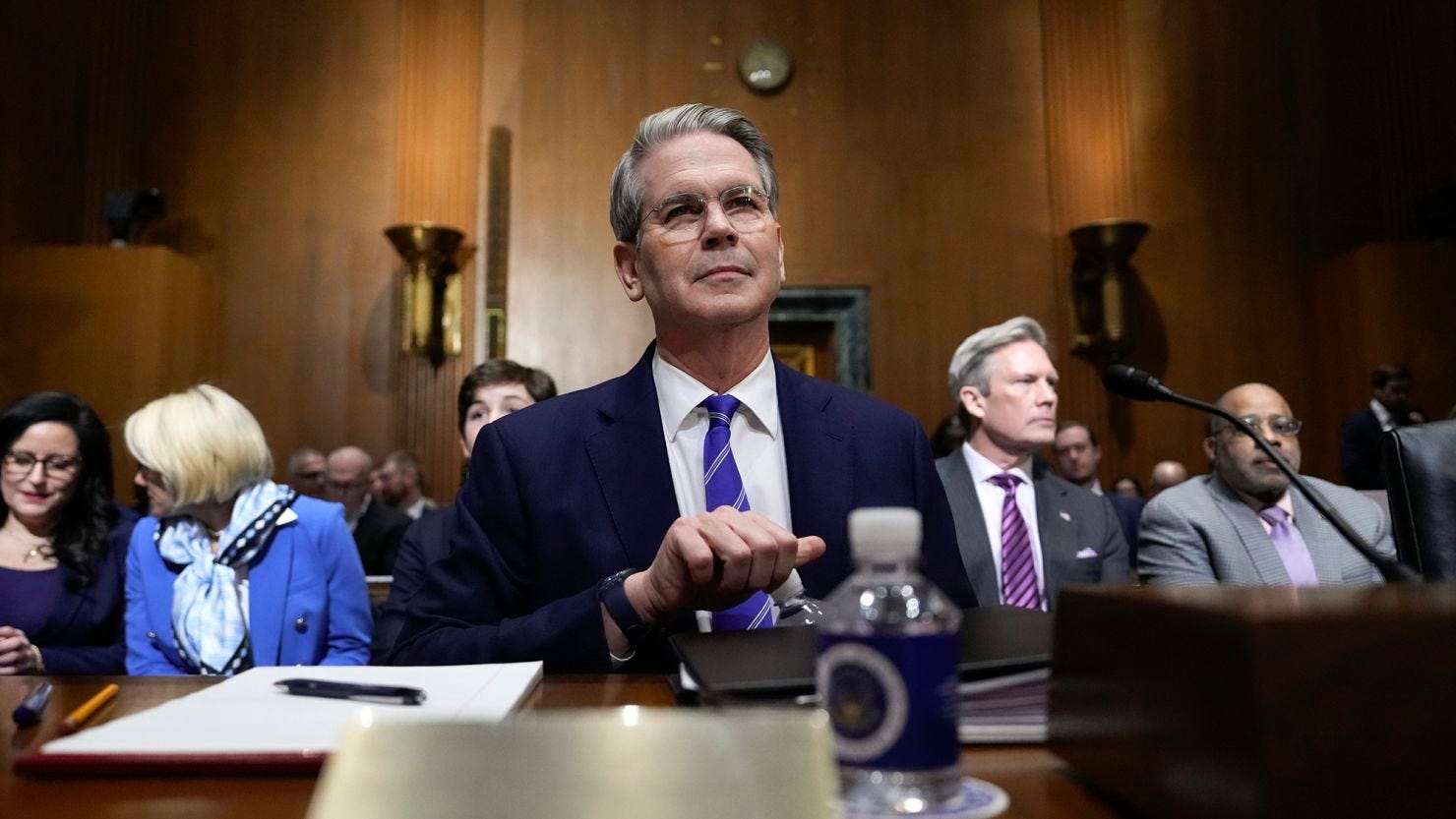
By Shanaka Anslem Perera
December 25, 2025
On December 10, 2025, Stephen Miran voted to cut interest rates by fifty basis points.
This would be unremarkable except for three facts that, taken together, reveal the most significant transformation in American monetary architecture since 1951. Three facts that financial media buried beneath discussion of the dot plot. Three facts that, once you see them, you cannot unsee.
First: Miran is simultaneously Chairman of the Council of Economic Advisers and a Governor of the Federal Reserve. No individual has held both positions since the Banking Act of 1935 specifically prohibited such arrangements to insulate monetary policy from executive influence. The man voting on interest rates reports to the President on economic policy.
Second: The paper Miran authored in November 2024, while advising the Treasury Secretary who now coordinates weekly with the Fed Chair, proposed that foreign central banks be induced to exchange their Treasury holdings for hundred-year zero-coupon bonds. This is a soft default by another name.
Third: His dissent called for more accommodation than the Fed was providing. The author of the most radical debt restructuring proposal in modern American history believes current monetary policy is insufficiently supportive of Treasury financing needs.
The vote was nine to three. Two governors dissented in the opposite direction, wanting no cut at all. The fracture revealed in that meeting has no precedent since September 2019.
The financial press covered the hawkish dot plot. They missed the story entirely.
Nine days earlier, on December 1, 2025, the Federal Reserve terminated quantitative tightening after forty-one months and 2.43 trillion dollars of balance sheet reduction. Eleven days later, on December 12, the New York Fed began purchasing approximately forty billion dollars monthly in Treasury bills through a program called Reserve Management Purchases.
The stated purpose is maintaining ample bank reserves.
The actual effect is providing a guaranteed bid for exactly the short-duration securities the Treasury needs to issue.
Between these two dates, the architecture of American monetary policy changed. The change was disclosed in press releases. It was announced in FOMC statements. It hides in plain sight because no one with authority will name it for what it is.
This is the story of how the Federal Reserve lost its independence without anyone saying so.
I. THE CONFESSION NOBODY HEARD
Treasury Secretary Scott Bessent addressed the Treasury Market Conference on November 12, 2025. His remarks were released as press statement sb0314. One sentence should have generated global headlines.
“The work we do here directly impacts affordability and quality of life out there. Which is why we must succeed.”
Parse that sentence carefully.
The Treasury Secretary stated publicly that Treasury market operations directly impact quality of life for Americans. He then declared that success in those operations is mandatory.
This is not an observation about market functioning. This is a declaration that Treasury yields will be managed as a policy variable. The benchmark rate from which mortgage rates and auto loan rates and corporate borrowing costs derive will be engineered to achieve outcomes rather than discovered through market clearing.
The arithmetic explains why.
Net interest on federal debt reached nine hundred fifty-two billion dollars in fiscal year 2025. Eighteen point three percent of all federal revenue consumed before a single soldier was paid, a single benefit disbursed, a single agency staffed.
The Congressional Budget Office projects this will exceed one trillion dollars in fiscal year 2026.
Federal debt crossed thirty-eight trillion dollars on October 23, 2025. At that scale, every hundred basis points of yield increase adds three hundred eighty-four billion dollars to annual interest expense. Two hundred basis points adds seven hundred sixty-eight billion. Three hundred basis points adds one point one trillion.
The Treasury must roll over nine point two trillion dollars in maturing securities during 2025. Thirty percent of all marketable debt outstanding. Every basis point of yield increase on that refinancing compounds through the system for the duration of the new securities.
Perform the calculation that explains everything that follows.
At current deficit levels and current interest rates, the federal government cannot stabilize its debt-to-GDP ratio through any politically feasible combination of spending restraint or revenue increase. The Congressional Budget Office projects debt-to-GDP will reach one hundred fifty-six percent by 2055 under current law.
The only variable that changes this trajectory is the interest rate.
The interest rate is determined by the Federal Reserve.
This is not an argument about what the Fed should do. This is an observation about what the Fed must do given the constraints within which it now operates.
When sovereign debt service becomes existential, the institution that determines that cost loses its capacity for independence. Not because anyone conspires. Not because anyone decides. Because mathematics does not negotiate.
II. THE ARCHITECTURE THEY BUILT
In the eight months since the April 2025 tariff crisis, Treasury Secretary Bessent and Federal Reserve Chair Powell have constructed an operational framework that maintains the legal fiction of independence while achieving the functional reality of coordination.
Every element is documented. Every mechanism is disclosed. The architecture hides in plain sight.
The first pillar is the Treasury buyback program.
Treasury announced expanded buyback operations on July 30, 2025. The program executes liquidity support buybacks targeting older off-the-run securities trading at discounts. Treasury identifies these illiquid long-duration bonds and purchases them through competitive auctions, financing the purchases by issuing new Treasury bills.
The effect is precise: long-duration debt that trades poorly is removed from the market and replaced with short-duration debt that trades well. Supply in the segment of the curve most sensitive to fiscal sustainability concerns decreases. Supply in the segment the Federal Reserve has committed to purchase increases.
The second pillar is the termination of quantitative tightening.
On October 29, 2025, the Federal Open Market Committee announced that balance sheet reduction would end December 1. Since June 2022, the Fed had been allowing approximately twenty-five billion per month in Treasury holdings to mature without replacement. This drain ended at precisely the moment Treasury buybacks required maximum liquidity support.
Fed balance sheet reduction had removed 2.43 trillion dollars since mid-2022. The balance sheet now stands at 6.53 trillion. The decision to halt further reduction was characterized as a technical adjustment to maintain ample reserves.
The third pillar is Reserve Management Purchases.
On December 10, 2025, the New York Fed announced it would begin purchasing Treasury bills at approximately forty billion dollars per month starting December 12. The stated purpose: maintaining ample reserves in the banking system as the Treasury General Account fluctuates.
Bank reserves currently stand at adequate levels. The operational effect of Reserve Management Purchases is different from the stated purpose.
The Federal Reserve is now providing a guaranteed bid for exactly the short-term securities the Treasury issues to fund its buyback operations.
Observe the circuit.
Treasury issues bills to fund long-bond buybacks. The Fed purchases those bills for reserve management. Long-duration debt is converted into short-duration debt which is converted into central bank reserves. The Fed’s balance sheet expands not through purchases of duration assets, which would be recognized as quantitative easing, but through purchases of bills, which can be characterized as technical operations.
The economic effect is indistinguishable from debt monetization.
The political presentation is entirely different.
The fourth pillar is the coordination itself.
Bessent maintains weekly breakfast meetings with Jerome Powell. These meetings are characterized as traditional Treasury-Fed coordination. What is unprecedented is the policy alignment that emerges from them.
The December 2025 rate cut occurred despite inflation running above two percent. Despite employment remaining robust. Despite every traditional monetary policy criterion suggesting rates should hold steady.
The Fed cut anyway.
Because the Treasury needed it to.
III. THE MAN WHO WROTE THE BLUEPRINT
To understand the architecture requires understanding the man who designed its intellectual foundation.
Stephen Miran served as Senior Advisor for Economic Policy at the Treasury Department from 2020 to 2021. He subsequently joined Hudson Bay Capital as a strategist. In November 2024, he published a paper titled “A User’s Guide to Restructuring the Global Trading System.”
The paper proposed what Miran called a “Mar-a-Lago Accord.” Foreign central banks holding Treasury securities would be induced to exchange those liquid holdings for hundred-year zero-coupon bonds. The inducement mechanism: tariffs and security guarantees calibrated to encourage compliance.
A hundred-year zero-coupon bond pays nothing for a century. At any reasonable discount rate, its present value approaches zero. Exchanging current Treasury holdings for such instruments would constitute a soft default, transferring wealth from foreign creditors to American taxpayers through duration rather than principal reduction.
Miran was confirmed as Chairman of the Council of Economic Advisers in March 2025. In September 2025, he was confirmed as a Governor of the Federal Reserve Board.
Senator Jack Reed stated directly at his confirmation hearing: “You’re going to be technically an employee of the president of the United States, an independent member of the board of the Federal Reserve. That’s ridiculous.”
Senator Ruben Gallego introduced the Fed Integrity and Independence Act on the day Miran was sworn in, specifically to prohibit such arrangements in the future.
Miran placed himself on unpaid leave from the CEA rather than resigning. The distinction matters legally. It matters institutionally. It reveals the intent.
At the December 10 FOMC meeting, Miran dissented. He voted for a fifty basis point cut when the committee delivered twenty-five. The author of the most radical Treasury restructuring proposal in modern American history believes current accommodation is insufficient.
No William McChesney Martin is emerging from this Treasury. Martin negotiated the 1951 Accord that established Fed independence, then became Chairman and its most vigorous defender. He said the Fed’s job was to take away the punch bowl just as the party gets going.
Miran voted to make the punch bowl larger.
IV. THE SEVEN DAYS THAT REVEALED EVERYTHING
The moment of revelation came in April 2025.
On April 2, President Trump signed Executive Order 14257 invoking the International Emergency Economic Powers Act to impose tariffs ranging from ten percent baseline to over fifty percent on designated countries. The administration called it Liberation Day.
Within seven trading days, the administration paused most tariffs for ninety days.
