The Triangular Trap: How Israel’s Managed Friction With Russia Serves and Sabotages American Power
The $6.7 Billion Arrow-3 Deal, the Patriot Triangle, and the Sanctions Gap That Consensus Cannot Price

Shanaka Anslem Perera
January 8, 2026
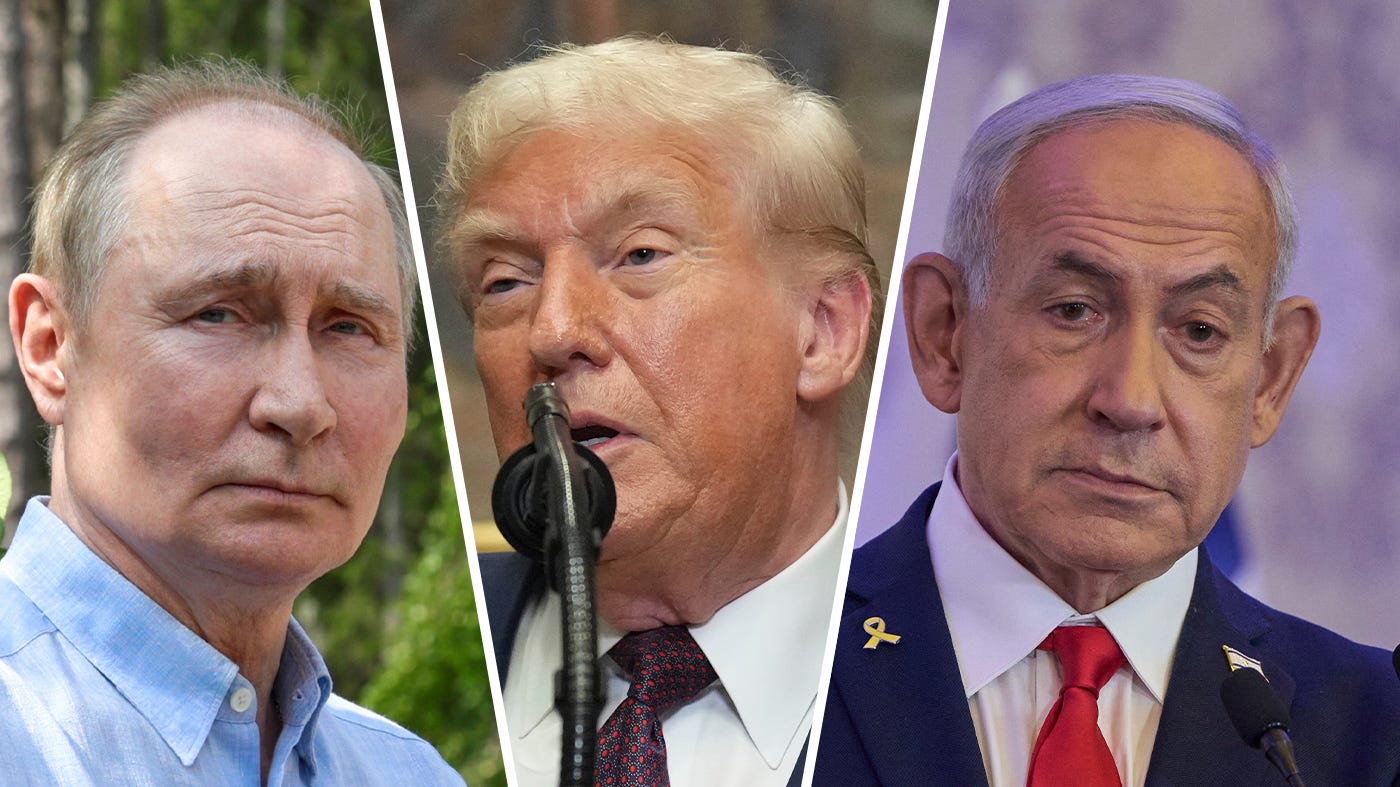
The central bank governors and sovereign wealth fund CIOs reading this document are positioned wrong on a dynamic that will reshape global capital allocation over the next eighteen months. The consensus view treats Russia-Israel relations as a bilateral curiosity, a diplomatic anomaly to be monitored but not modeled. This is a catastrophic analytical failure. The relationship operates as a triangular mechanism that simultaneously provides Washington with its most valuable backchannel to Moscow, constrains American coalition-building on Ukraine, creates systematic leakage in the sanctions architecture, and delivers technology deterrence against Russia through systems operating entirely outside US control. These four effects do not merely coexist. They interact through feedback loops that neither bilateral analysis nor standard geopolitical frameworks can capture.
The thesis is precise and falsifiable: Russia-Israel “managed friction” creates asymmetric effects on US relationships that will persist through late 2026 absent three specific phase transition triggers. The mechanism operates through four documented transmission channels. The binding constraint that prevents rupture is not diplomatic friendship but a structural lock created by post-Assad Syria geometry plus Russia’s deliberately designed “no entangling alliance” doctrine plus Israel’s implicit technology deterrence leverage plus a diaspora calculus that Putin himself has publicly identified as a policy constraint. The consensus misses this because Middle East analysts do not model European security spillovers, European security analysts do not model Middle East dynamics, and both ignore the triangular effects on Washington that neither bilateral relationship captures in isolation.
The evidence is overwhelming. On January 17, 2025, Russia and Iran signed a Comprehensive Strategic Partnership Treaty spanning 47 articles. The treaty explicitly excludes a mutual defense clause, a deliberate architectural choice that creates a ceiling on Russian commitment to Tehran. During the June 2025 Israel-Iran twelve-day war, Russia provided zero military assistance to its strategic partner, offering only rhetorical condemnation while positioning itself as mediator. Four Putin-Netanyahu phone calls occurred between May and November 2025, up from zero in 2024. Israel lobbied Washington to preserve Russian military bases in Syria as a buffer against Turkish influence. The Patriot transfer to Ukraine happened via triangular mechanics that preserved Israeli ambiguity while crossing material thresholds. Arrow-3 deployed to Germany with explicit US facilitation and aggressive German demand, making Israel the guarantor of European air defense against Russian ballistic missiles. Each of these facts is verified through primary sources. Together, they reveal a system operating according to logic that consensus frameworks cannot decode.
What follows is the complete institutional playbook. The mechanism. The timing. The ten objections defeated at full strength. The specific positioning implications. The exact thresholds that would trigger phase transition. The monitoring framework for early warning. The analysis that $10,000-per-hour consultants cannot provide because they lack the cross-domain integration to see what siloed expertise misses. The positions are already being built by those who understand that triangular dynamics create exploitable mispricings in how markets evaluate Israeli risk assets, Russian sanctions pressure, European defense integration, and the probability distribution around Ukraine conflict resolution.
The Mechanism That Consensus Cannot Model
The Russia-Israel relationship functions as a transmission mechanism with four distinct channels, each creating effects on US relationships that neither US-Russia nor US-Israel bilateral analysis captures. Understanding this mechanism is not optional for institutional allocators. It determines whether Israeli risk premiums are correctly priced, whether European defense stocks reflect the full demand trajectory, whether sanctions architecture leakage is adequately modeled, and whether Ukraine conflict resolution probabilities incorporate the actual strategic landscape.
The first channel is diplomatic backchannel value. Israel served as a verified US-Russia communication pathway during the Biden administration’s diplomatic freeze with Moscow. Prime Minister Naftali Bennett’s March 5, 2022 surprise visit to Putin was the first by any Western leader after the invasion. The visit was conducted “in close coordination with the Biden administration,” earning explicit praise from Secretary of State Antony Blinken. Bennett subsequently held more than three calls with Putin and more than six calls with Zelensky as part of mediation efforts that, according to Bennett’s own detailed account, achieved Russia dropping the “denazification” requirement and Ukraine renouncing NATO membership before collapsing after the Bucha revelations emerged in early April 2022.
The backchannel persisted through Netanyahu’s return to power. According to Israeli public broadcaster Kan reporting in December 2025, Netanyahu has been “working to reduce tensions between Trump and Putin with the awareness and consent of Trump,” with some Putin calls remaining undisclosed. Netanyahu confirmed this arrangement in the Knesset: “I speak with President Putin on a regular basis, and this personal relationship of many years serves our vital interests.”
Trump’s second term fundamentally altered this calculus without eliminating it. The February 12, 2025 Trump-Putin call lasting ninety minutes and described as “highly productive” was the first US presidential contact with Putin since the invasion. By October 2025, there had been at least eight Trump-Putin calls, some lasting over two hours, with face-to-face summit discussions for Saudi Arabia or Moscow actively under consideration. The direct channel’s restoration means Israel shifted from essential intermediary to supplementary facilitator. Chatham House analysis captured this precisely: Israel now “seeks to position itself as a valued facilitator on certain regional issues, such as Russian presence in Syria,” rather than as the primary US-Russia communication bridge.
Network theory illuminates why Israel’s diplomatic value fluctuates with US-Russia communication temperature rather than following linear trajectory. In network topology, “bridge nodes” are vertices that connect otherwise disconnected graph components. When direct edges between major nodes are severed, bridge nodes gain disproportionate leverage. Israel functions as a bridge node in the US-Russia network. When direct US-Russia communication edges were severed during Biden’s diplomatic freeze, Israel provided the alternative path topology. Under Trump, the direct US-Russia edge was restored through presidential calls. Israel’s bridge node leverage diminished proportionally but specialized toward regional subgraphs where direct US-Russia edges remain undeveloped. Bridge node leverage is state-dependent, and this explains the transition without requiring any change in Israeli preferences or capabilities.
The second channel is Ukraine coalition friction. Israel’s calibrated neutrality on Ukraine generated documented friction with both Kyiv and Washington before an elegant workaround emerged. The evidence trail is stark. Ukraine’s October 2022 formal request listed Iron Dome, David’s Sling, Arrow, and Barak-8 systems. Israel refused all. Zelensky’s public frustration escalated from “Israel gave us nothing. Nothing, zero” in September 2022 to “Israel is afraid of Putin” in November 2024. Congressional pressure mounted with Senators Lindsey Graham and Chris Van Hollen explicitly demanding Iron Dome transfers in June 2023.
Netanyahu’s stated rationale centered on Syria deconfliction: “Israel is the only country whose pilots fly over the Golan Heights at a very short distance from the Russian jets in Syria, because we have to prevent Iranian military aid to Hezbollah.” Secondary justifications included technology security concerns about weapons “falling into Iranian hands.”
The triangle mechanism resolved this impasse while preserving ambiguity. In the final weeks of the Biden administration, approximately ninety Patriot interceptors transferred from Israeli stocks to Ukraine via US Air Force C-17 aircraft. The transfer was authorized before inauguration day and executed during the transition period, representing the final act of the outgoing administration’s coalition-building logic. The political choreography was precise. Israel “returned” decommissioned systems to the United States, the original owner, which then transferred them to Ukraine. Israeli officials could truthfully state “Israel did not transfer Patriot systems to Ukraine.” Russia was notified in advance. The mechanism demonstrated how triangular dynamics permit outcomes that bilateral pressure cannot achieve.
Then came the February 2025 rupture that marked the new administration’s approach. Israel voted against a UN General Assembly resolution reaffirming Ukraine’s territorial integrity. This was the first time Israel voted against Ukraine since the war began. The vote placed Israel alongside Russia, North Korea, Belarus, and only fifteen other nations. Foreign Minister Gideon Sa’ar’s justification was explicit alignment with the new administration: “We voted with the Americans... we thought it was right to give a chance to America’s initiative to try to end this war.” Ukrainian Ambassador Korniychuk responded: “Only Israel found itself in the position of voting with Russia and North Korea. That is sad.”
This represented not Israeli independence but complete alignment with Trump’s Russia reset. The triangular dynamics now serve Moscow’s diplomatic interests rather than constraining them. The Patriot transfer was transactional, selling old inventory in a manner the incoming administration could tolerate. The UN vote was political, the first demonstration of the new alignment. The positioning implication is significant: Israeli risk assets no longer carry the “caught between superpowers” discount that applied under Biden. Israel has chosen a side in the great power competition, and that side is wherever Trump positions America.
The third channel is sanctions architecture leakage. Israel occupies a unique position as a Western-aligned democracy that has explicitly declined to impose Russia sanctions while rhetorically committing to prevent sanctions evasion. The structural gap is documented. Israel has no indigenous sanctions legislation and legally can only freeze assets for terrorism or Iran nuclear-related cases. Bilateral trade continued at approximately three to four billion dollars through 2024, with Russian exports to Israel totaling $2.37 billion, heavily weighted toward minerals, gems, precious metals, and oil.
US pressure has been direct but without enforcement consequences. Undersecretary Victoria Nuland publicly warned in March 2022: “You don’t want to become the last haven for dirty money that’s fueling Putin’s wars.” Blinken pressed Israeli officials on sanctions compliance. FinCEN’s December 2022 report named Israel among top Middle East destinations for suspicious Russian oligarch financial activity, alongside Cyprus and the United Arab Emirates.
The specific leakage channels include the diamond trade nexus, where Haaretz identified five Israeli companies working with Alrosa, the sanctioned Russian diamond monopoly, in October 2022. Russia produces approximately 27% of global diamond supply by value, and complex supply chains through India for cutting make origin tracking difficult. Technology transfer investigations in March 2025 documented Check Point Software security devices worth more than three million dollars reaching Russia via Sri Lanka and Malaysia, Cellebrite phone-hacking equipment still used by Russian security forces, and ISCAR metalworking tools reaching the Russian defense sector through Uzbekistan and China intermediaries. Oligarch assets present another channel, with Roman Abramovich, an Israeli citizen, plus Mikhail Fridman, Petr Aven, and German Khan maintaining Israeli connections with combined worth of approximately $21 billion. Israeli law cannot bar citizens from entering without arrest warrants.
Israel has taken administrative half-measures. Bank of Israel guidelines prevent sanctioned individuals from transferring money. Twenty-four-hour limits apply to unregistered planes and ships. Ministry of Economy guidance letters went to companies. But Israel notably remains outside the REPO Task Force tracking oligarch assets and is not a member of multilateral export control regimes including the Wassenaar Arrangement, Australia Group, MTCR, and Nuclear Suppliers Group.
The gap serves Israel’s interest in maintaining Russia dialogue while creating potential sanctions architecture leakage that US enforcement has not directly addressed. This has positioning implications. The sanctions pressure that markets model as continuously tightening contains systematic leakage that reduces its effectiveness. Russia’s economic resilience partly reflects these gaps. Allocators pricing complete Russian isolation should incorporate this structural porosity.
The fourth channel is technology deterrence through active US facilitation. This channel shows the clearest US-Israel alignment and the most active US facilitation, undermining any narrative of tension over Russia ties. On the technology deterrence dimension, Washington and Jerusalem operate in lockstep.
Arrow-3 deployment represents the flagship evidence. The system was jointly developed by the Israeli Missile Defense Organization and the US Missile Defense Agency with Israel Aerospace Industries and Boeing as prime contractors. It received US State Department approval on August 17, 2023. Defense Minister Gallant credited Secretary Austin for playing a “central role.” The first Arrow-3 battery deployed at Germany’s Holzdorf Air Base on December 3, 2025. A December 2025 Bundestag vote expanded the deal to $6.5 to $6.7 billion, making it Israel’s largest-ever defense export.
The December 2025 Bundestag expansion vote reflected not merely US permission but aggressive German demand under Chancellor Friedrich Merz, whose CDU government committed to comprehensive Bundeswehr rearmament after assuming power in May 2025. Merz, historically more hawkish on defense and more Atlanticist than his predecessor Scholz, accelerated procurement timelines and expanded the scope of Israeli defense integration. This European agency dimension strengthens the durability of Israeli defense integration. Even if Trump’s Russia reset produces diplomatic thawing, German rearmament commitments create institutional demand that persists independently of White House preferences. Israel is not merely serving US interests; it is becoming the arsenal of the new conservative European security architecture.
Arrow-3 forms the critical top tier of the European Sky Shield Initiative, providing exoatmospheric interception capability that no European nation previously possessed. The system can intercept missiles launched from 2,400 kilometers away, demonstrated 99% interception rates against Iranian attacks in April 2024, and directly counters Russian intermediate-range ballistic missile threats. Germany’s procurement positions central Europe with coverage against threats from Kaliningrad.
Additional US facilitation includes David’s Sling to Finland at $345 million approved in August 2023, ITAR status upgrades granting Israel near-NATO privileges for defense transfers, and 22 CFR Section 123.9 authorization permitting component retransfers without prior DDTC approval. Zero evidence exists of US opposition to Israel-NATO defense integration. The absence itself proves alignment.
Israel’s “grey zone” Ukraine support operates through the same US facilitation channel. The 300,000 artillery shells transferred from War Reserve Stockpile Ammunition-Israel to Ukraine in 2023 were US-owned and US-transferred. The Patriot triangle mechanism required US Air Force logistics. Emerging proposals to transfer Russian weapons captured from Hezbollah, totaling more than 85,000 weapons with 60 to 70 percent Russian-manufactured, would similarly route through US facilitation.
The positioning implication is direct. Israeli defense equities do not merely benefit from Middle East demand. They are structurally integrated into NATO’s anti-Russia architecture. This demand trajectory is more durable and higher-margin than regional sales alone would suggest. Elbit Systems’ $25.2 billion backlog reflects this reality. The valuation framework must incorporate European rearmament demand persisting for a decade or more.
The Binding Constraint Consensus Misses
Every framework requires identification of the binding constraint, the factor that prevents the system from moving to an alternative equilibrium. In the Russia-Israel relationship, the binding constraint is not diplomatic friendship. It is not shared values. It is not economic interdependence. The binding constraint is a structural lock created by four interlocking factors that consensus analysis systematically underweights.
